


%20(1).png)
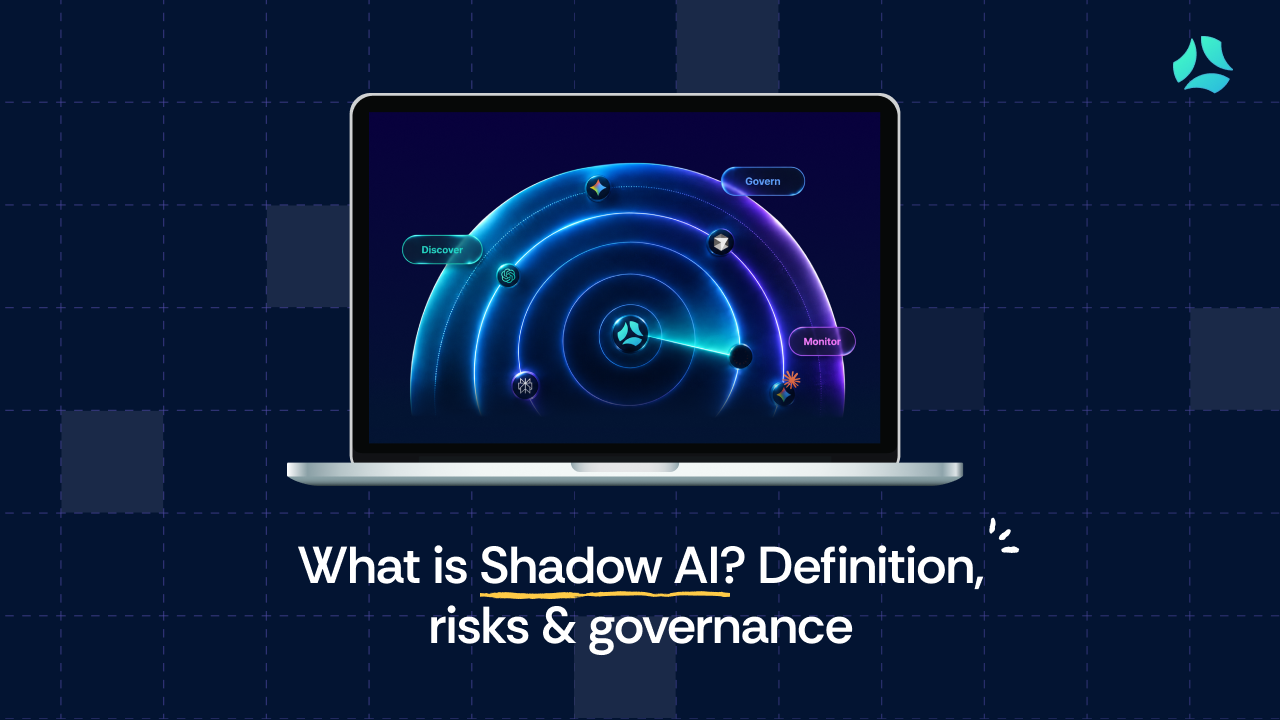


- Shadow AI is when employees use AI tools such as ChatGPT, Copilot, or Gemini without IT or security approval, often without realizing the data they share may be used to train external models.
- Unlike Shadow IT, Shadow AI can expose sensitive data in ways that are difficult to reverse or control.
- Shadow AI typically starts in Engineering, Marketing, and Sales, where employees turn to AI tools to work faster under deadline pressure.
- A written AI policy does not stop Shadow AI. Organizations need approved alternatives and visibility into which AI tools employees actually use.
- For GRC teams, Shadow AI can mean unlogged decisions, unauditable outputs, and silent compliance violations that traditional governance processes may not catch.
Imagine this scenario: It’s 11 PM on a Thursday. A developer is trying to fix a critical production error. They paste a block of proprietary source code into ChatGPT, ask for help debugging it, and get the answer in seconds. No DLP alert fires. No security ticket is created. No one from GRC knows the exchange happened.
This is Shadow AI: the use of AI applications and tools that have not been formally reviewed or approved by an organization. And it is already becoming part of everyday workflows, from developers using coding assistants to sales teams summarizing customer data with generative AI.
Many people assume Shadow AI is the same or an extension of Shadow IT, when that’s really not true. The critical difference is how data is processed and potentially retained by external AI services. With Shadow AI, employees can unknowingly send proprietary code, customer PII, internal documents, or other sensitive information to third-party models, creating data exposure that may be difficult or impossible to reverse.
For CISOs and GRC leaders, Shadow AI therefore demands more than another policy on paper.
This guide goes deeper into "what is Shadow AI" and how it differs from Shadow IT, why it spreads, where it appears, the risks and compliance gaps it creates, and how organizations can detect and govern it.
What is Shadow AI?
Shadow AI is the use of AI tools or features outside an organization’s established governance and visibility, including AI applications that have not been formally reviewed or approved.
It can expose sensitive data to external AI models, create unlogged decisions, and introduce risks that traditional IT controls may not detect.
How does Shadow AI differ from Shadow IT?
Shadow AI is often treated as an extension of Shadow IT, but the distinction matters. Shadow IT is primarily about employees using unsanctioned software, cloud services, or infrastructure. Shadow AI is about what happens to the data once AI enters the workflow: how it is processed, potentially retained or used for training, and incorporated into outputs or decisions.
As Aditya Parab, Lead Product Manager at Scrut Automation, puts it: “The critical difference is data exposure.”
Employees may use an AI tool because it helps them meet a deadline, debug code, summarize a document, or draft an email faster. The intent is usually productivity, not bypassing security controls.
The scope is broader than standalone chatbots. Shadow AI can include consumer LLMs such as ChatGPT, Claude, and Gemini; AI features embedded in approved SaaS platforms; browser extensions; and API integrations built without security review.
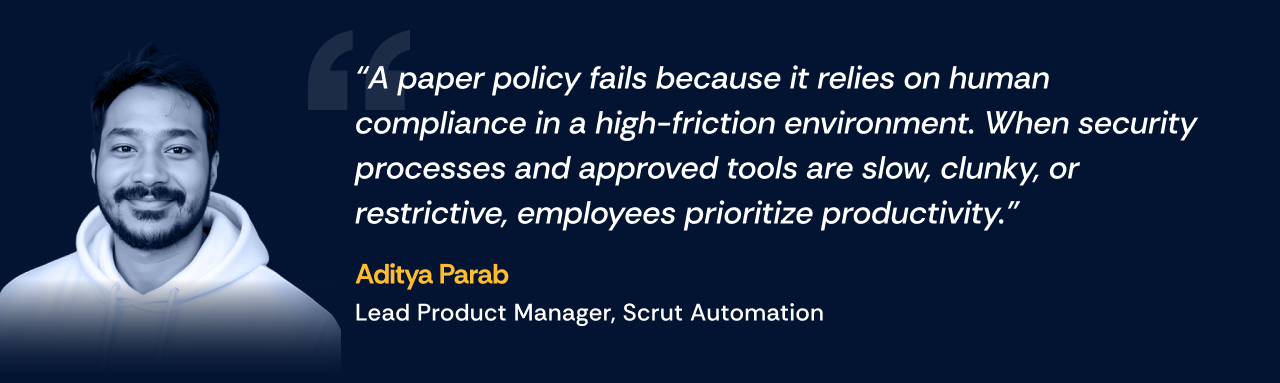
A paper policy fails because it relies on human compliance in a high-friction environment. When security processes and approved tools are slow, clunky, or restrictive, employees prioritize productivity.”
Aditya Parab, Lead Product Manager, Scrut
Another important nuance: an AI tool does not have to be unauthorized for Shadow AI risk to emerge.
Sandip Wadje, Managing Director at BNP Paribas, describes how an organization rolled out Microsoft Copilot and discovered that the tool could surface data that the employees’ managers did not realize was accessible. Copilot itself was sanctioned, but the underlying data governance had not kept pace.
As Sandip explains, AI adoption is making data classification and access control much more consequential because AI can surface information that was previously difficult to discover. That makes Shadow AI a governance problem, not simply an IT inventory problem.
Effective AI governance, therefore, needs to look beyond which tools are approved. It also needs to consider what data those tools can access, how they process that data, and whether the resulting activity can be monitored and audited.
That starts with getting data classification right. For a practical guide to building a data classification policy, read our guide on data classification.
Why Shadow AI spreads even when you have a policy
A written AI policy can define what employees should and should not do. It cannot, by itself, explain why employees reach for unapproved tools in the first place.
Shadow AI spreads when employees can get work done faster with AI tools outside the organization’s approved processes. When the sanctioned option feels slower or harder to use, people are more likely to turn to whatever tool is readily available.
1. Ease of access beats procurement
Most consumer AI tools are only a browser tab away. Employees can create an account, paste in a problem, and get an answer without waiting for procurement, IT, or security approval. There is little friction between having a question and sending company information to an AI service.
2. Speed wins under deadline pressure
The gap widens under deadline pressure. A developer trying to resolve a production issue or finish a sprint may choose the AI assistant that gives them an answer immediately rather than wait for an approved alternative.
3. AI creates a tooling illusion
Shadow AI is not always an obvious decision to use an unauthorized chatbot. AI is increasingly built into software employees already use, from productivity platforms to CRM systems and browser extensions.
An employee may not think of clicking an AI-powered “summarize” or “generate” button inside an approved application as using a new AI service. Yet the feature may process customer information, internal documents, or other sensitive data in ways the organization has not assessed.
4. The “Shadow Productivity” cycle
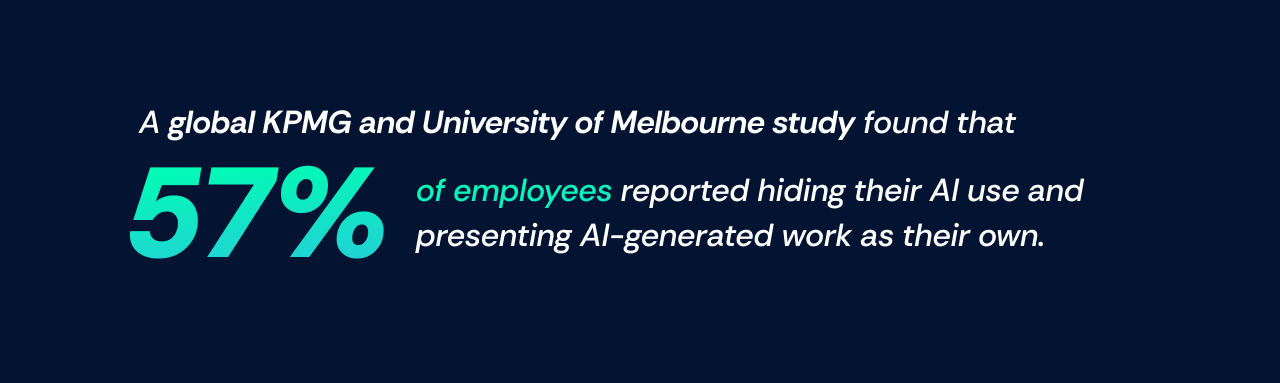
When employees believe AI use is discouraged or unclear, they may be less likely to disclose which tools they are using.
This can make Shadow AI invisible to managers. They may not know which workflows rely on AI, which tools employees have connected, or what information they submit.
5. The policy-behavior gap
A policy that simply bans AI does not remove the underlying demand. It can instead push AI usage outside formal visibility.
Walter Haydock, Founder, StackAware, warns that restrictive AI policies can simply push employees toward unsanctioned tools:
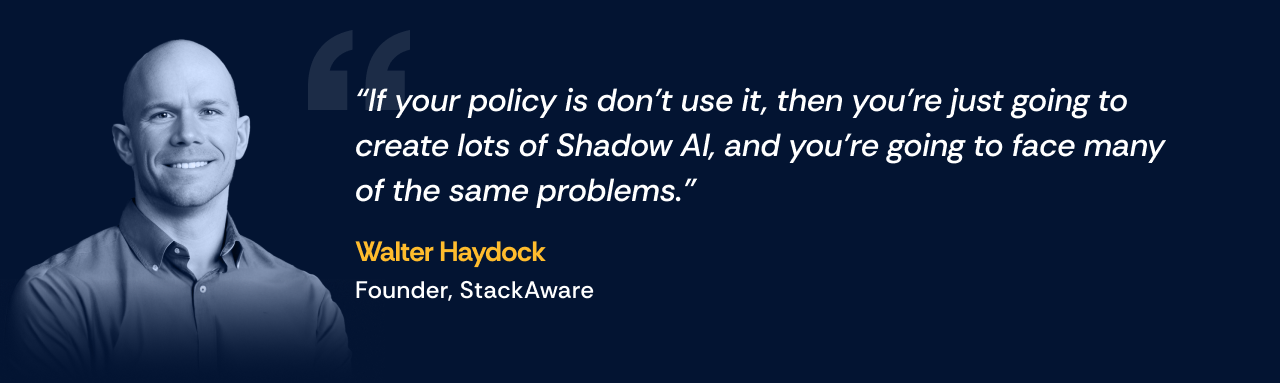
He also argues that policies need to reflect how employees actually use AI, rather than becoming long documents that exist primarily to be defensible.
The answer is not to eliminate AI experimentation. It is to create safe, approved ways for employees to use it.
Sandip Wadje describes this as creating a “collaborative kitchen” where employees can experiment with AI within sensible boundaries:
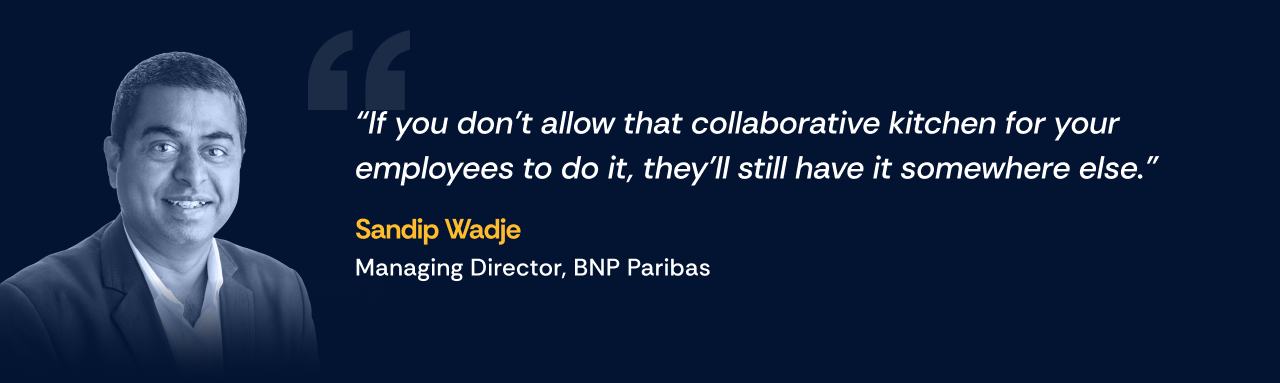
The principle is straightforward: if employees cannot access useful AI tools through a governed environment, they will find their own. Approved alternatives, clear data boundaries, employee training, and ongoing monitoring make it easier to follow the rules without slowing down work.
This is where continuous compliance becomes important. AI usage changes faster than a policy can be rewritten. Organizations need governance that can identify new tools, assess their use, and surface gaps as they emerge.
Where Shadow AI takes root: The teams and workflows at highest risk
Shadow AI rarely announces itself as a security event. It usually appears inside an ordinary workflow where an employee is trying to save time. For CISOs and GRC teams, that means knowing where AI is most likely to enter the organization and what signals can reveal it.
Engineering and development
Engineering is often the highest-risk starting point. As Aditya Parab described:
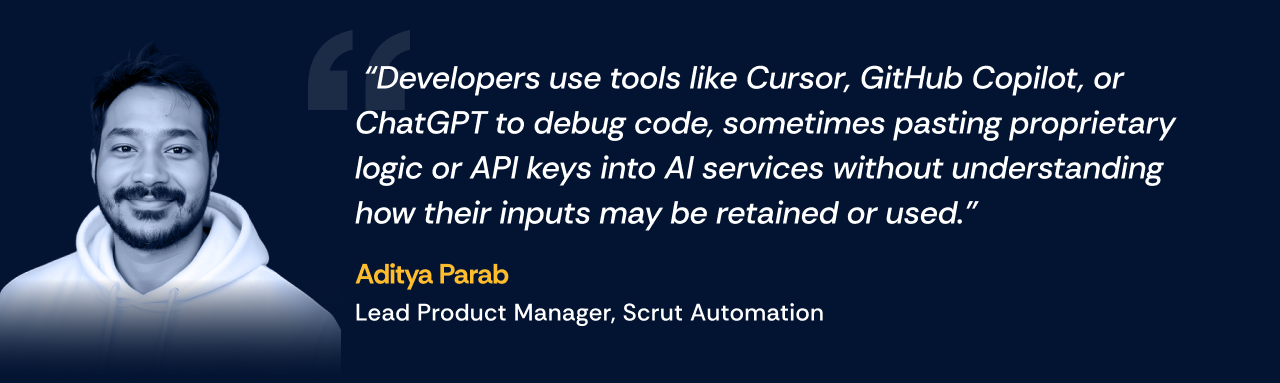
AI coding assistants can also introduce risk through generated code. Their suggestions may reflect patterns from broad training datasets, and teams may not always validate outputs for security vulnerabilities, licensing concerns, or compliance requirements before incorporating them into production systems.
Marketing and sales
Marketing and sales teams have different exposure points. Employees may use Jasper, Claude, Gemini, or Grammarly to summarize customer meetings, draft emails, analyze prospect information, or refine campaign content. Those workflows can expose customer PII, CRM information, pricing details, or internal strategy.
Sales teams may also rely on AI-generated prospect insights without validating the underlying information, creating a separate risk around inaccurate or untraceable decisions.
Data analytics
Analytics teams can turn to ChatGPT or custom LLM APIs to analyze datasets faster. Uploading customer records, financial information, or sales data to an external AI service can create privacy and third-party risk, particularly when employees do not understand the service's retention, training, or data-use terms.
Product and strategy
Product managers may upload roadmaps, product requirements, competitive intelligence, or strategy documents to Claude, Notion AI, or other embedded assistants for summarization and analysis. Sensitive information can leave the organization's intended boundaries before anyone assesses where it goes or who can access it.
Three signals Shadow AI is already spreading
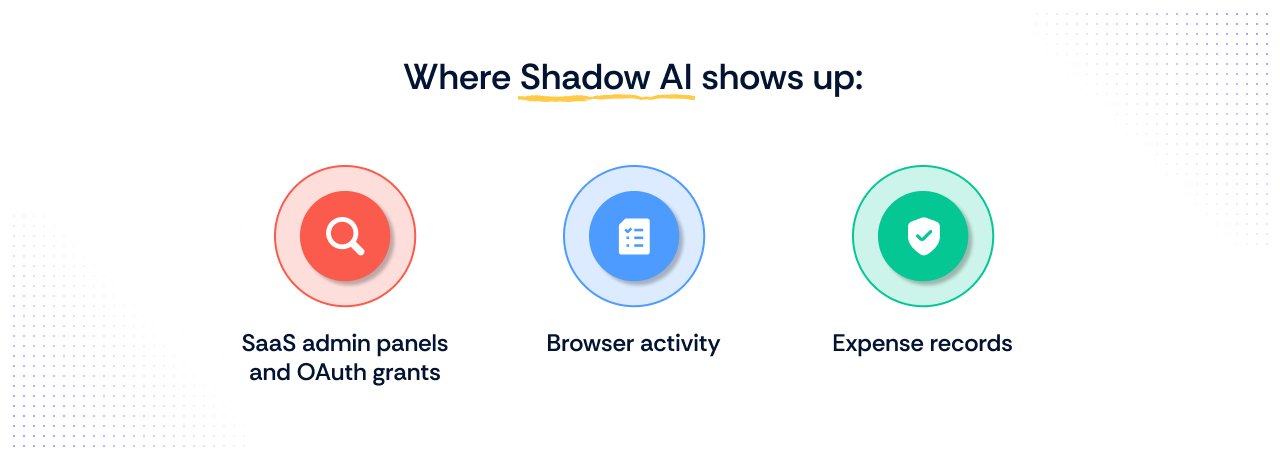
1. SaaS admin panels and OAuth grants: Look for spikes in employees authorizing third-party AI applications through corporate Google Workspace or Microsoft Entra credentials. These grants can reveal AI tools that never went through procurement or security review.
2. Browser activity: Monitor for unusual volumes of file uploads or copy-paste activity involving AI domains while employees are working with sensitive internal pages. Traditional DLP controls may not see the full context of browser-based interactions.
3. Expense records: Look for individual AI subscriptions appearing on employee expense reports. Recurring charges for tools such as ChatGPT Plus or Claude Pro can indicate that employees are procuring AI capabilities outside approved channels.
These signals can be combined with access reviews and vendor risk management to turn scattered signs of AI adoption into something GRC teams can assess and govern.
The AI-specific risks Shadow IT misses
Shadow IT creates familiar problems: unauthorized applications, unmanaged access, and data stored outside approved systems. Shadow AI introduces those risks too, but adds something harder for GRC teams to govern: how AI models process, retain, transform, and act on organizational data.
Three risks in particular change the equation.
1. Data persistence: the irreversibility problem
With a conventional SaaS application, an organization can often request data deletion or revoke access. AI can complicate that assumption. Depending on the provider, model, account type, and settings, an AI service may retain or use submitted information to improve the model.
That means proprietary source code, customer information, or internal documents could cross the organization's intended data boundary and become difficult to fully retrieve or control.
As Walter Haydock explains, the underlying third-party risk is not new. What is different with AI is the possibility of unintentional training:
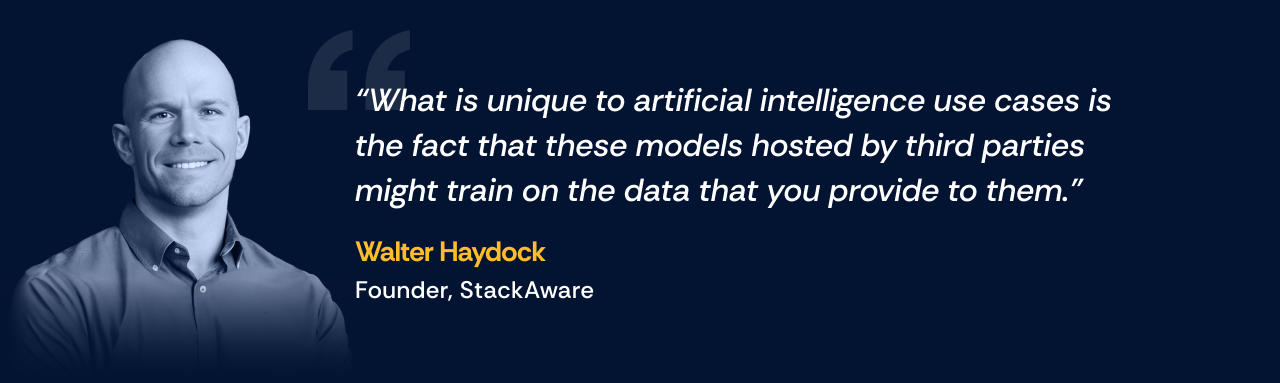
For GRC teams, this turns a simple data-sharing question into a data lifecycle problem: Where did the data go? How was it used? Can it be deleted? Could it influence a model beyond the original interaction?
2. Unlogged and non-deterministic decisions: the audit trail problem
AI can also make decisions or generate outputs without leaving the kind of evidence traditional systems produce. An employee might use an unapproved AI assistant to generate code, summarize a contract, evaluate a customer request, or draft a regulated communication. The final output may enter a business workflow without a record of the prompt, model, source data, or reasoning behind it.
AI outputs can also vary even when users provide similar prompts. Hallucinations, inaccurate recommendations, or insecure code can therefore enter operations without a clear trail showing how the decision was made or who reviewed it.
For GRC teams, that creates a fundamental audit problem: if you cannot reconstruct how an output was produced, it becomes much harder to demonstrate that the right controls were applied.
3. Hidden supply chain risk: the sub-processor problem
An AI application may look like a single vendor while relying on multiple models, APIs, infrastructure providers, and subprocessors behind the scenes. Data submitted to one tool could therefore move through a chain of third parties that the organization never evaluated directly.
This expands the traditional vendor risk model. A GRC team may complete a vendor risk assessment for the application it purchased without realizing that the application's AI functionality depends on additional providers handling organizational data.
That makes understanding data flows and sub-processor risk essential to AI governance. The question is no longer simply “Is this vendor secure?” It is also “Who else receives our data, what do they do with it, and where does it ultimately go?”
The conventional risks still matter
Shadow AI does not replace traditional security and privacy risks. It amplifies them.
Sensitive information can still be exposed, creating obligations under GDPR, HIPAA, CCPA, and other privacy requirements. Unsecured APIs and overprivileged integrations can expand the attack surface, while inaccurate or biased outputs can influence business or regulated decisions.
AI-connected systems also introduce threats such as prompt injection, where malicious instructions can manipulate an AI system connected to internal data or tools.
The scale of the problem makes these risks harder to dismiss. Research cited by the National Cybersecurity Alliance (NCA) has found that 43% of employees admit to sharing sensitive work information with AI tools without employer permission.
Separately, industry research has reported that more than 80% of AI tools used within organizations are unmanaged by IT or security teams.
For GRC leaders, the takeaway is clear: Shadow AI is not simply Shadow IT with an AI label. It creates new questions around data permanence, decision traceability, and third-party data flows that traditional risk models were not designed to answer.
What Shadow AI means for SOC 2, ISO 27001, GDPR, and AI-specific frameworks
Shadow AI does not create a separate compliance category. It creates gaps in the controls and evidence organizations already rely on. The impact depends on what data the AI tool processes, how it is used, and which regulatory or contractual obligations apply.
SOC 2: access and monitoring gaps
For SOC 2, Shadow AI can create exposure relevant to CC6.1 and CC7.2. If an employee uses an unapproved AI tool to access, process, or transmit production data, the organization may no longer have clear evidence of who authorized that access or how the activity was monitored.
During audit fieldwork, this can lead to straightforward questions: Who approved the tool? What data could it access? What controls governed its use? What evidence shows that the activity was monitored? If the organization cannot answer those questions, the audit trail problem becomes an evidence gap.
For a closer look at the controls that support SOC 2 compliance, read our guide to SOC 2 controls.
ISO 27001: asset and policy visibility
Shadow AI can also undermine the intent of ISO 27001 controls around information security policies and asset management. An AI application processing company information without going through the organization's approval process can sit outside established inventories, ownership records, and risk assessments.
The issue becomes even more important as organizations adopt ISO 42001, which introduces AI-specific management requirements.
ISO 42001: the inventory problem
ISO 42001 puts greater emphasis on understanding the AI systems an organization uses, assessing their impact and risks, and documenting how they are governed.
Siddhi Vadhwana, Information Security Manager at Scrut Automation, recalls that Scrut's implementation of the framework included an AI tool inventory, AI system impact assessment, AI risk assessment, and system documentation.
Shadow AI makes that baseline difficult to establish. If an AI tool is being used without security or GRC visibility, it is unlikely to appear in the organization's AI inventory or risk register.
Nicholas Muy, CISO at Scrut Automation, makes the broader point here: organizations may not control third-party models such as those provided by major AI vendors, but they remain responsible for how those models are used within their own products, services, and infrastructure.
GDPR and data privacy: follow the data
Privacy obligations become particularly important when employees send personal data to unapproved AI services. Under GDPR Article 28, organizations need appropriate contractual arrangements when processors handle personal data.
An employee sending personal data to an AI provider outside the organization's approved vendor and processing arrangements can therefore create a compliance and data-governance issue.
The same principle extends to other privacy regimes, including India's DPDPA and the CCPA: organizations need visibility into where personal data goes, who processes it, and what contractual and security safeguards apply.
For a deeper look at the requirements and practical steps involved, read our guide to GDPR compliance.
NIST AI RMF: governance starts with visibility
The NIST AI RMF emphasizes establishing governance around AI risks, responsibilities, and use. That becomes difficult when AI adoption is invisible. Without knowing which tools employees use, what they use them for, and what data they handle, GRC teams cannot build an accurate AI risk picture.
The practical takeaway across these frameworks is the same: you cannot govern what you cannot inventory. Shadow AI turns an unknown application into an unknown compliance exposure, making discovery and documentation the first step toward AI compliance. NIST AI RMF
Shadow AI is also increasingly relevant to regulated environments such as financial services and healthcare, where existing requirements around third-party risk, data protection, access, and auditability can apply to AI-enabled workflows.
For organizations building an AI governance program, the goal is not to create a separate compliance process for every AI tool. It is to bring AI use into the same risk, evidence, and accountability workflows that already support broader AI compliance.
How to detect and govern Shadow AI
Shadow AI governance starts with visibility. Before deciding what to approve, restrict, or monitor, security and GRC teams need to know which AI tools are being used, what data they touch, and where the greatest risks lie.
Much of this visibility can come from tools and data the organization already has.
1. Build an AI tool inventory
Start with your identity provider. In Google Workspace, Microsoft Entra, or Okta, review third-party applications authenticated with corporate credentials.
Look for AI applications, coding assistants, plugins, and meeting summarizers with access to email, Drive, SharePoint, or other sensitive resources.
Then check existing firewall, proxy, and DNS logs for traffic to AI services such as api.openai.com and api.anthropic.com. Finance records can also reveal AI subscriptions purchased outside procurement.
Some usage will not appear in technical or financial records. A short, non-punitive employee survey can help identify tools employees use through personal accounts.
Bring these signals together in an AI tool inventory covering approved, unapproved, and embedded AI capabilities. For each tool, record its users, purpose, data access, provider, and risk level.
2. Set clear boundaries around data
Not every AI use carries the same level of risk. Start by identifying information that requires the strongest protection, such as proprietary source code, customer PII, financial models, intellectual property, and unreleased product roadmaps.
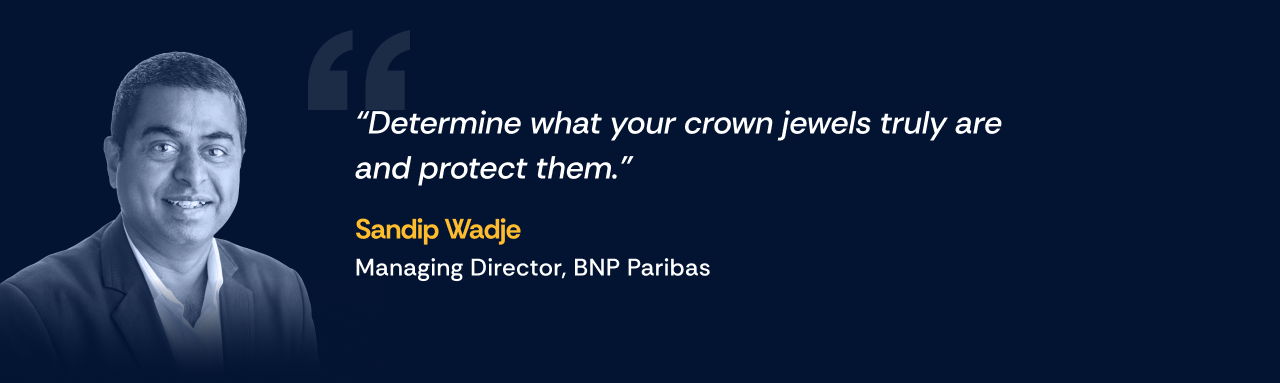
Use these classifications to set clear boundaries around AI use.
Developers should not paste production credentials or sensitive source code into unapproved AI tools. Sales teams should not upload unredacted CRM exports for summarization. HR teams should not process employee PII through consumer AI services.
This gives employees practical rules while giving security teams clear controls to monitor.
3. Provide approved alternatives
A policy that simply says “don't use AI” is unlikely to stop employees from using it. If approved tools are difficult to access or too restrictive, employees may turn to consumer alternatives instead.
“When you block AI tools without providing approved alternatives, employees don't stop using them; they just take them further underground.”
Aditya Parab, Lead Product Manager, Scrut Automation
Provide sanctioned AI tools with appropriate security and data protection controls. Make the safe path the easy path.
4. Keep AI risk under review
Shadow AI will change as quickly as the technology itself. New tools, embedded features, integrations, and use cases can introduce new risks after an initial assessment.
Make AI risk part of the regular governance cycle. Review the AI inventory alongside quarterly risk register updates and reassess significant use cases as they change.
New AI-related OAuth grants or discovered applications can also trigger a review.
Nicholas Muy recommends treating AI risk as a standing item and maintaining a regular reassessment cadence as AI capabilities evolve.
The process is straightforward: discover AI use, identify the data at risk, set practical boundaries, provide approved alternatives, and reassess as the environment changes.
How Scrut turns Shadow AI exposure into an auditable workflow
Shadow AI governance works best when it becomes part of the GRC processes you already run, rather than another standalone initiative. Scrut brings AI tool discovery into your compliance program, connects AI-specific risks to the risk register, and supports AI compliance automation and ISO 42001 certification readiness.
Continuous control monitoring can surface new AI tool integrations as they appear, helping your AI inventory stay current as adoption grows. Security and GRC teams can see which applications are used, who accesses them, and whether they have been reviewed.
Scrut doesn't prevent employees from discovering AI tools. It ensures that when they do, that discovery enters an auditable, governable workflow, not a blind spot.
For a closer look at how Scrut helps teams discover, govern, and continuously monitor Shadow AI, read Scrut’s guide to Shadow AI governance. You can also book a demo to see how Scrut can help you govern AI adoption within your existing GRC program.
Shadow AI is the use of AI-powered applications and development tools that have not been formally reviewed by your organization. These tools can enter the environment before Security, IT, or GRC teams have assessed how they are being used or the risk they introduce.
Shadow IT refers broadly to applications adopted outside approved IT processes, whereas Shadow AI is more on the AI-specific subset, where applications may interact with company data, code, APIs, or development environments and require additional review.
Scrut discovers applications through connected identity and device sources, including supported SSO integrations such as Google Workspace and Microsoft Entra, and supported device-management sources. Discovered tools are surfaced within People → Access Reviews → Applications.
Scrut identifies discovered AI tools as AI Apps or AI Builders, so teams can isolate AI-powered applications from the broader application list and review them with the right context.
The application appears in the Discovered tab for review. Teams can then mark it as Managed if it is approved, Restricted if it should not be used, or Ignored if it does not require further action.


%201.png)