





- CCM verifies that controls are working continuously, going beyond verifying they were set up correctly at audit time.
- The gap for most teams is governance cadence and accountability, not tooling. Most platforms already do the foundational evidence collection.
- Periodic audits tell you where you were. CCM tells you where you are.
- Automated alerts mean nothing without a named person who acts on them.
- CCM is not a setup task. It is a governance rhythm that has to outlast the last audit.
Continuous controls monitoring (CCM) is the practice of verifying that security controls are working on an ongoing basis, continuously and between formal audits.
Your SOC 2 Type II report covers a defined observation period. Your ISO 27001 certificate was current at your last surveillance audit. Both tell you something true about a specific window of time. Neither tells you what is happening right now.
If you use a compliance automation platform with solid integrations, you are probably already doing a meaningful portion of CCM. This article helps you see which parts, and name what is still missing.
The problem with checking controls once a year
The SOC 2 Type II observation period is a defined window, typically three to twelve months, during which your auditor evaluates whether controls operated effectively.
The next observation period often begins as soon as the previous one closes, but the audit testing for that new cycle does not happen until months later. In between, the environment keeps changing, and no formal check catches it.
This is the structural limitation of point-in-time attestation, not a failure of the audit model.
Consider a concrete example: an AWS S3 bucket policy is correctly configured when your observation period closes. Three months later, a new engineer deploys a misconfigured bucket. Under a periodic evidence model, no automated check catches it. It sits there until the next audit cycle, or until something goes wrong.
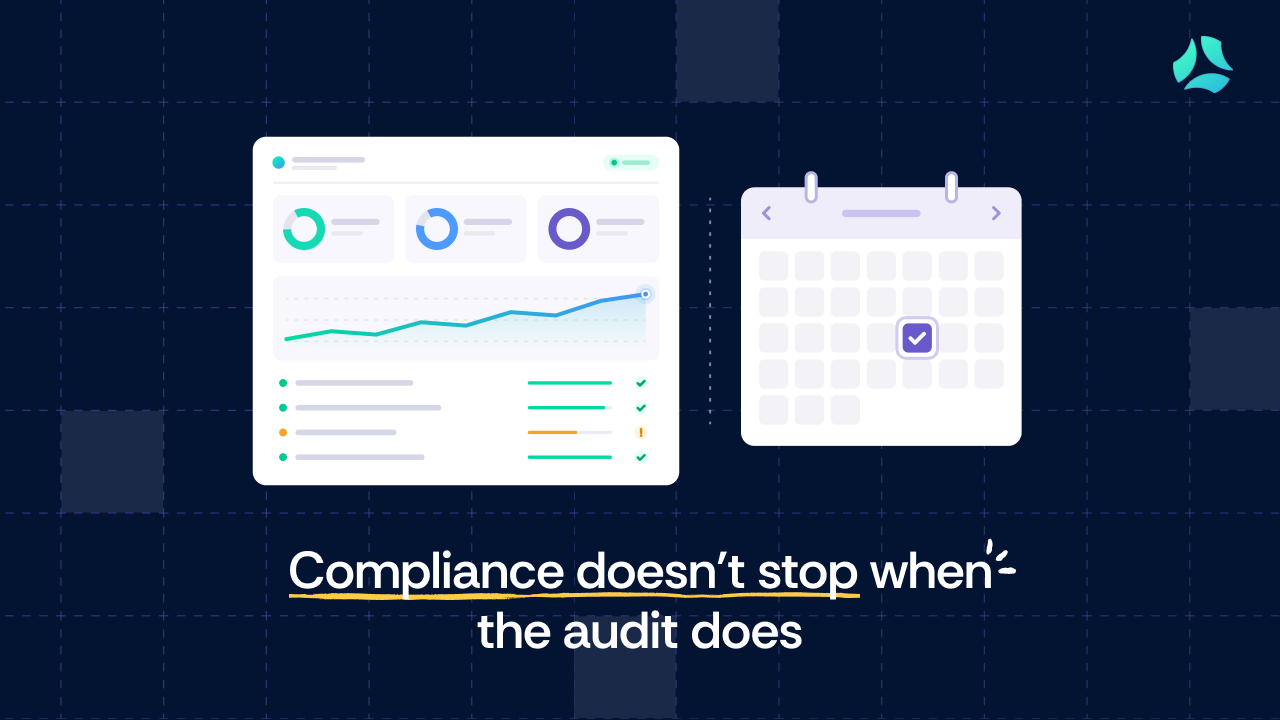
Point-in-Time vs Continuous: What Each Captures

What Continuous Controls Monitoring Actually Means (And What It Doesn't)
CCM is not a product category, a certification, or a vendor announcement. It is a practice: ongoing, automated verification that security controls operate as designed between formal audits.
Before defining what CCM adds, it helps to distinguish three layers that most practitioners conflate. See automated controls testing for how these layers map to specific control types.
CCM adds the third layer without replacing the first two. A control that is continuously monitored is still required to go through external attestation for the frameworks that require it. CCM makes that attestation easier; it does not make it optional.
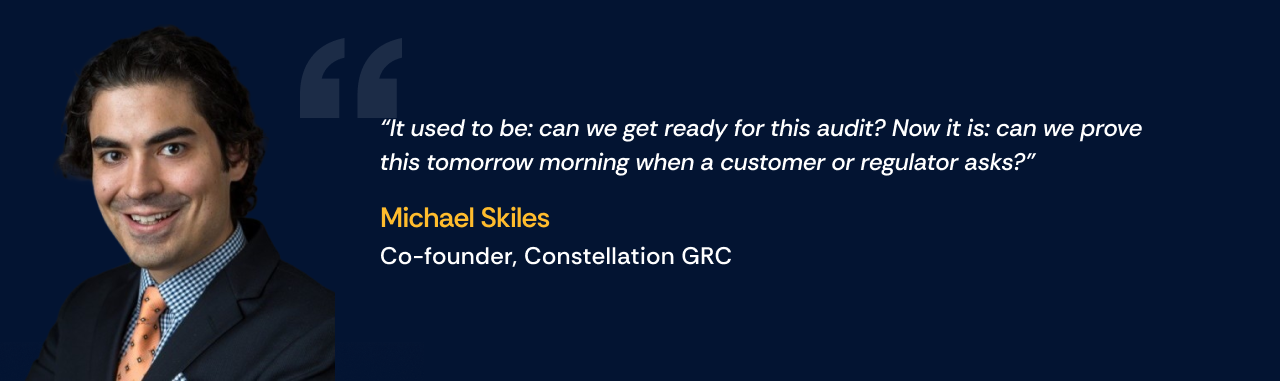
This shift is the operational driver behind CCM adoption. GRC automation platforms now make the foundational evidence collection work automatable. What most teams still lack is the governance layer on top of it.
For more on GRC automation, read our guide on GRC automation in 2026.
The Gap Between "Compliant" and "Actually Under Control"
A company can hold a valid SOC 2 Type II report and an active ISO 27001 certificate while control failures go unnoticed until the next audit cycle. This is not a contradiction. This is expected behavior for a system designed to verify history, not predict the future.
Three causes of post-audit control drift account for most of the gap between a clean audit report and current control status.
Configuration change. Cloud infrastructure changes continuously: new services are onboarded, IAM policies are modified, network configurations are updated. None of these automatically trigger evidence re-collection under a periodic model. A control that was correctly configured during the observation window may be misconfigured two weeks after the auditor leaves.
Personnel change. Onboarding and offboarding create access review debt. A quarterly access review cadence means an employee who should not have access to a system may retain that access for up to 90 days before the next review cycle catches it. An offboarded contractor whose access was not immediately revoked may retain access for longer.
Third-party change. A vendor updates their system, modifying an integration in a way that affects a control. No questionnaire catches this between assessment cycles. The control was in place at the last review; it is no longer functioning correctly now.
The organizational risk is technical and structural. Leadership that sees a green compliance dashboard after a clean audit report may stop asking security questions. The dashboard reflects the last audit, not the current control state. CCM closes that gap.
What Continuous Controls Monitoring Looks Like in Practice
CCM operates in three layers. Most compliance automation platforms provide Layer 1. Layer 2 requires configuration discipline. Layer 3 requires humans.

The shift Matt describes is Layer 1 in practice: evidence that was previously collected manually on a quarterly cycle is now collected continuously from live integrations. The audit preparation sprint disappears because the evidence already exists. See automated evidence collection for how this works operationally and continuous compliance for the broader model.
For how Layer 1 works at the infrastructure level, see the cloud security posture management guide.
A Quick Self-Check: How Much of This Are You Already Doing?
CCM is not an all-or-nothing capability. Most compliance teams are already doing meaningful parts of it without calling it that. The checklist below maps your current program to three tiers. Tier 1 is what solid platform integrations give you by default. Tier 2 requires configuration discipline and named ownership. Tier 3 is where the program becomes genuinely proactive.
Work through the checklist below. If you use a compliance automation platform with solid integrations, you are likely doing most of Tier 1 and parts of Tier 2.
Most teams with solid platform integrations clear Tier 1 and parts of Tier 2. Tier 3 is where the program stops being reactive and where most teams without a dedicated GRC function have the most to build.
See compliance posture assessment and vendor risk management cadence for supporting guidance on Tier 2 and Tier 3 gaps.
What Continuous Controls Monitoring Does Not Replace
The honest case for CCM requires being clear about its limits. Each of the following represents a gap that no amount of automated monitoring closes.
The table above is the honest boundary. CCM surfaces signals; humans make decisions. A control continuously showing green means it is operating as configured, not that the configuration addresses the right risk.
How to Close the Gaps You Find
The self-audit above tells you which tier your program sits in. The steps below give you the first concrete action from each tier, starting this week.
If you are missing Tier 1
Audit your integration coverage. List every control and identify which are evidenced through live integrations versus manual screenshots. Any manual control is a candidate for automation.
Run your current-state baseline. Run your platform's cloud configuration checks against your live environment and document the delta from your last audit. That delta is what CCM closes.
See continuous risk management for the operational model.
If you are missing Tier 2
Name a control owner. Not a team, a person, with a calendar reminder. If no individual is accountable between audits, no one notices when a control fails.
Configure alert thresholds. Set your platform to notify on control state changes and treat those alerts the way a SOC treats vulnerability alerts: triage and respond, not file and forget.
Define your access review cadence in writing. Assign it to a named owner and schedule the next quarter's reviews before the current one ends.
See 5 ways CISOs measure ROI from continuous monitoring for how to frame the investment.
If you are missing Tier 3
Build a quarterly control-status summary for leadership. Not the audit report: a one-page view of which controls are passing, which have open exceptions, who owns each, and the remediation timeline. Audit reports show history; this shows current state.
Document your risk acceptance process. When a control fails and immediate remediation is not possible, there should be a written decision with a named owner and a revisit date. An email thread is not a risk acceptance.
See compliance monitoring for the operational infrastructure and how to create a risk register for the documentation model.
How Scrut supports continuous controls monitoring
Scrut Monitor collects evidence from your connected integrations continuously, replacing point-in-time screenshots with evidence that arrives as controls operate. Automated Tests run checks against your live environment and update control status in real time, alerting you when a control drifts before an auditor does. An evidence gap monitoring layer tracks collection status across every control, flags missing evidence, and routes tasks to named owners. These three capabilities cover Tier 1 and Tier 2 in the self-check above. Request a demo to see how it works.
CCM is the ongoing, automated verification that security controls are operating as designed between formal audits. It combines automated evidence collection from live integrations, real-time alerting on control state changes, and a human review cadence to maintain visibility into your posture year-round.
No. A SOC 2 audit produces an attestation report covering a defined observation period. CCM is what happens between audits: ongoing checks that verify controls are still working after the auditor leaves. The two are complementary; CCM makes audits easier but does not make them optional.
Not necessarily. Most compliance automation platforms already perform the foundational elements of CCM: automated evidence collection, misconfiguration alerts, and control-status dashboards. The gap for most teams is governance cadence and accountability, not tooling. Audit what you already have before buying something new.
Continuous compliance is the broader goal: maintaining a compliant posture at all times. CCM is the technical monitoring mechanism within it, specifically verifying that controls are functioning between audits. Continuous compliance also covers policy management, training, and vendor risk. CCM is one layer of that program.
The foundational automation layer is usually in place. The gaps are typically: named individual ownership of controls between audits, a defined escalation path when a control fails, and a governance rhythm that keeps leadership informed without waiting for the audit report. See the self-audit checklist above to identify which tier your program sits in.