


%20(1).png)


In contemporary business, compliance tackles a number of important concerns. Its main benefit is that it guarantees compliance with legal and regulatory standards, averting expensive fines and legal procedures.
By implementing strict security measures and lowering the likelihood of data breaches and cyberattacks, compliance also improves data protection. By standardizing procedures, it enhances operational efficiency and facilitates the more efficient identification and mitigation of risks. Additionally, compliance promotes credibility and confidence among stakeholders, including customers, investors, and regulatory bodies, which is crucial for business sustainability and growth.
A risk-based approach in compliance management allows businesses to identify and prioritize risks based on their potential impact, ensuring that resources are allocated efficiently to mitigate the most significant threats. This strategic focus enhances overall compliance effectiveness and fosters greater customer loyalty and trust by addressing the most critical issues first.
In this article, we will learn how a risk-based approach helps organizations navigate compliance management.
Section 1: Understanding risk-based approach (RBA)
What is risk based compliance management?
A risk-based approach (RBA) involves identifying, assessing, and prioritizing risks based on their potential impact and likelihood. This allows organizations to allocate resources more efficiently and effectively. Instead of treating all compliance requirements equally, an RBA focuses on the areas with the highest risks to ensure that the most critical threats are addressed first, thereby enhancing overall risk management and operational efficiency.
What are the main components of a risk-based approach to compliance management?
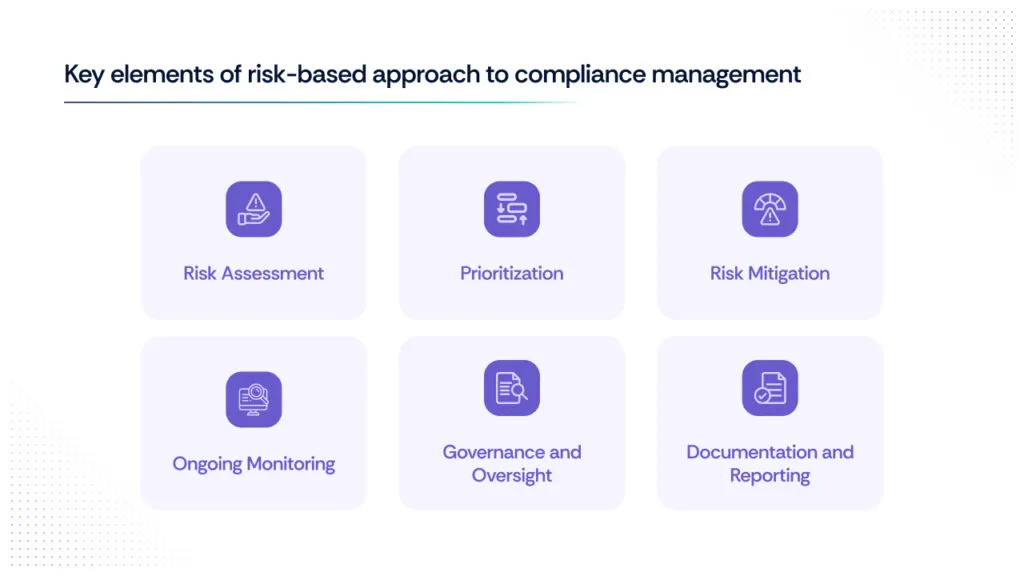
1. Risk assessment
Identifying and evaluating the risks of money laundering and terrorist financing to understand their potential impact and likelihood. This is the foundation of the RBA, helping organizations to understand the risk landscape in which they operate.
2. Prioritization
Based on the risk assessment, prioritize risks to allocate resources effectively. Higher-risk areas require more stringent controls and monitoring, while lower-risk areas may need less intensive measures.
3. Risk mitigation
Implementing control measures to manage identified risks. This includes establishing contingency plans, diversifying business operations, and developing internal controls to address specific risks.
4. Ongoing monitoring
Continuously monitor risk levels and the effectiveness of mitigation measures. This helps detect any changes in risk profiles and ensures that controls remain adequate.
5. Governance and oversight
Establishing a robust governance framework with clear roles and responsibilities to oversee the implementation and effectiveness of the RBA. Senior management involvement is crucial for accountability and oversight.
6. Documentation and reporting
Keeping comprehensive records of risk assessments, mitigation strategies, and monitoring activities. Regular reporting to relevant stakeholders, including regulatory authorities, is essential for transparency and compliance.
Section 2: Benefits of a risk-based approach in compliance
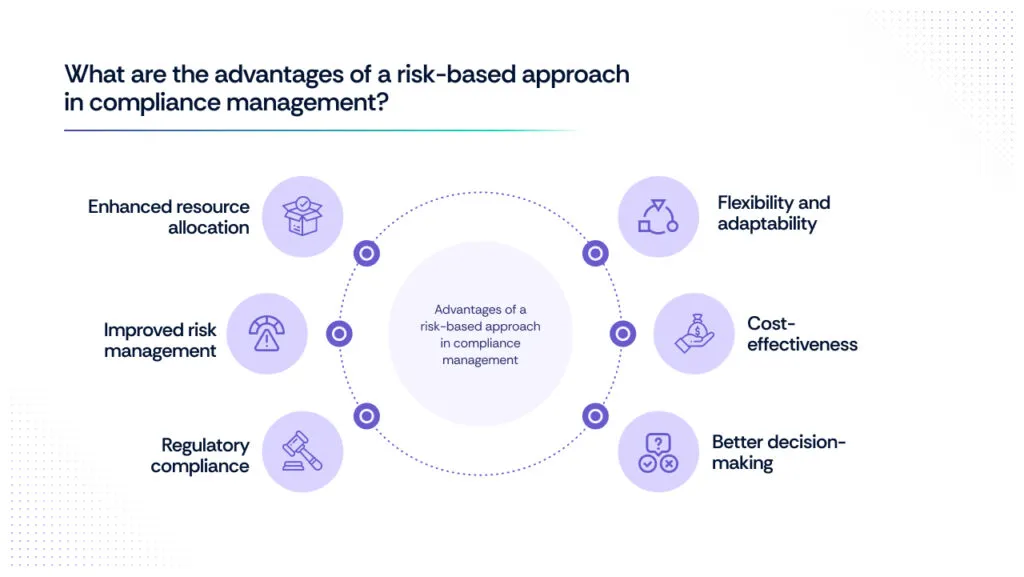
- Enhanced resource allocation: A risk-based approach enables institutions to allocate resources more efficiently by focusing on higher-risk areas, thereby ensuring that efforts are concentrated where they are most needed.
- Improved risk management: By identifying and assessing risks systematically, institutions can implement tailored controls and measures to mitigate these risks effectively, enhancing overall risk management.
- Regulatory compliance: Adopting an RBA helps institutions stay compliant with regulatory requirements by demonstrating that they understand and are actively managing their risks.
- Flexibility and adaptability: An RBA is more flexible than traditional rule-based approaches, allowing institutions to adapt to changing risks and regulatory environments more quickly.
- Cost-effectiveness: By focusing on high-risk areas, institutions can avoid unnecessary expenditures on low-risk activities, making the compliance process more cost-effective.
- Better decision-making: An RBA provides a structured framework for decision-making, enabling institutions to make informed decisions based on a thorough understanding of their risk environment.
Section 3: Implementing a risk-based approach in compliance management
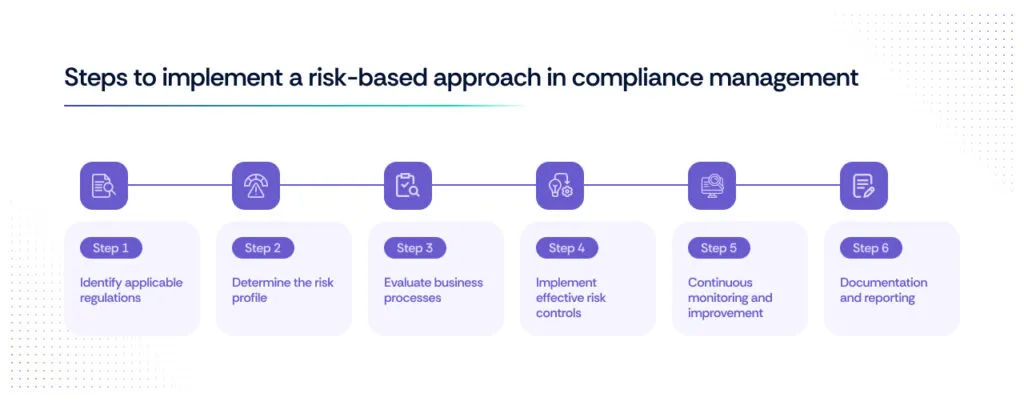
Implementing a risk-based approach in compliance management involves several strategic steps that align regulatory requirements with business processes, focusing on the most significant risks to manage compliance efficiently. Here are the detailed steps:
Step 1: Identify applicable regulations
Start by identifying all relevant rules, regulations, and statutes that apply to your industry and operational geography. This foundational step ensures that all compliance efforts are relevant and targeted.
Step 2: Determine the risk profile
Assess the potential risks associated with non-compliance with each regulation. This includes understanding the likelihood of non-compliance and the impact it would have on the organization. This step sets the stage for prioritizing compliance efforts based on risk severity.
Step 3: Evaluate business processes
Map out business functions and processes to determine where compliance risks are most likely to occur. This helps apply a targeted approach to those areas that are most at risk and could benefit most from compliance oversight.
Step 4: Implement effective risk controls
Develop and implement control measures that can mitigate identified risks. These controls should be proportionate to the level of risk and can range from policy changes and training programs to more sophisticated technological solutions.
Step 5: Continuous monitoring and improvement
Regularly monitor the effectiveness of implemented controls and make adjustments as needed. Compliance is not a static target; as regulations change and the business evolves, so too should your compliance management strategies.
Step 6: Documentation and reporting
Keep thorough records of risk assessments, control measures, and compliance monitoring activities. This documentation is crucial for internal audits, regulatory inspections, and providing transparency to stakeholders about your compliance management efforts.
Section 4: Tools and techniques for implementing the risk-based approach in compliance management
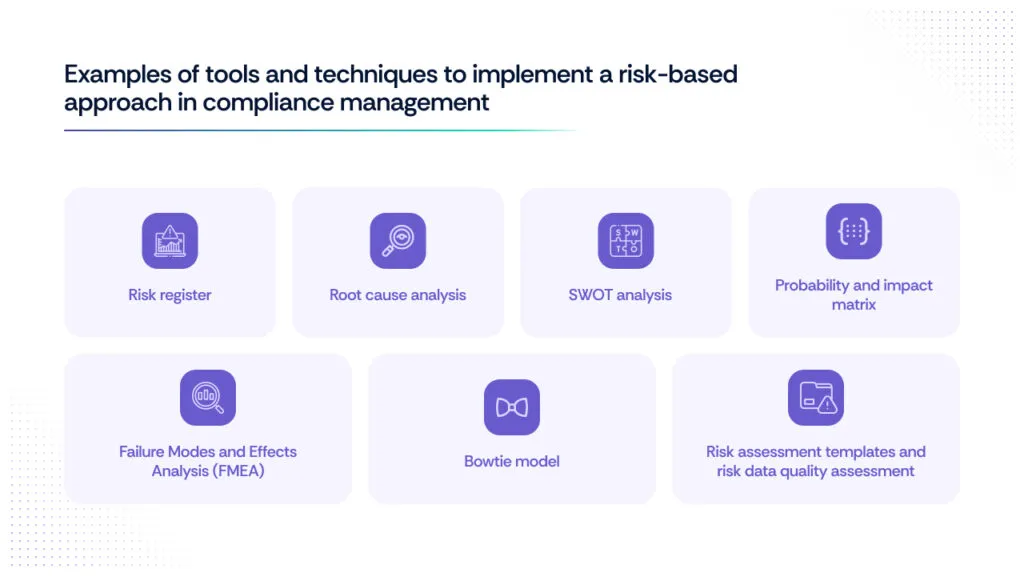
Several tools and techniques are crucial in facilitating effective risk assessment and management in various industries, especially in project management:
- Risk register: The risk register is a comprehensive tool that lists all identified risks, their potential impact, the probability of occurrence, and mitigation strategies. It serves as a central repository for monitoring and managing risks throughout a project.
- Root cause analysis: This technique helps identify the underlying causes of risks, allowing teams to address the source rather than the symptoms of risks, thereby preventing recurrence.
- SWOT analysis: Stands for Strengths, Weaknesses, Opportunities, and Threats. This framework helps organizations in identifying internal and external risks and opportunities, forming a strategic perspective on managing risks.
- Probability and impact matrix: This tool helps in prioritizing risks by assessing the likelihood of their occurrence and their potential impact on project objectives. It’s essential to focus efforts on the most significant risks.
- Failure Modes and Effects Analysis (FMEA): FMEA is a systematic approach for identifying all possible failures in a design, a manufacturing or assembly process, or a product or service. It’s particularly useful in product development and systems engineering.
- Bowtie model: This tool provides a visual diagram of the path from risk cause to risk consequence, allowing teams to easily identify and implement preventive and mitigative controls.
- Risk assessment templates and risk data quality assessment: These tools offer structured approaches to evaluating and managing risks, ensuring consistency and completeness in risk data collection and analysis.
Section 5: Challenges and solutions
Section 6: The role of continuous monitoring
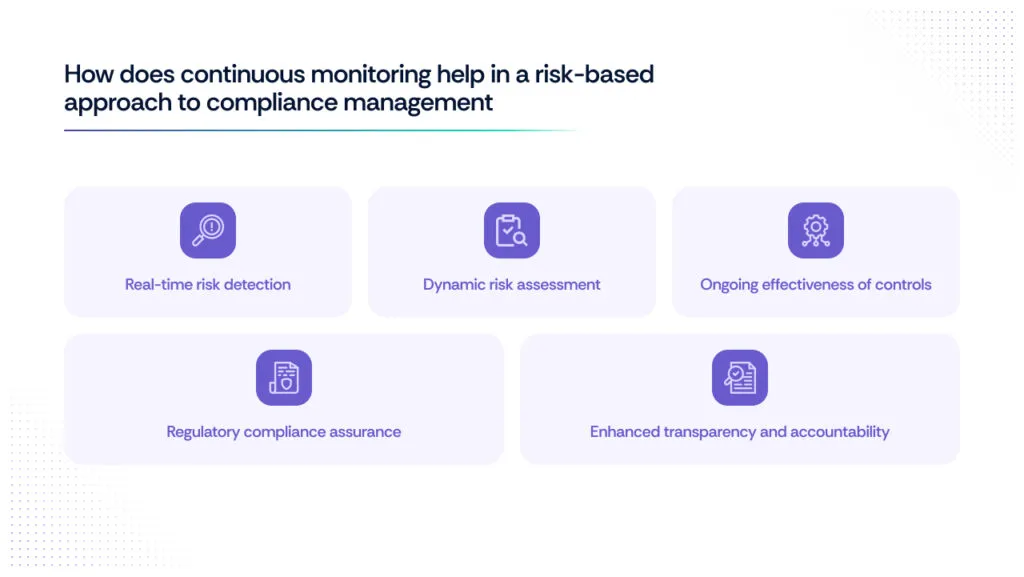
Continuous monitoring plays a pivotal role in a risk-based approach to compliance management by enhancing the effectiveness and responsiveness of an organization’s compliance strategies. Here are the key ways it helps:
- Real-time risk detection: Continuous monitoring allows organizations to detect compliance risks as they occur rather than retrospectively. This real-time detection enables timely interventions to mitigate risks before they escalate, thereby reducing potential damage.
- Dynamic risk assessment: Since risks can evolve with changes in business activities, market conditions, or regulations, continuous monitoring ensures that risk assessments are current and reflect the true risk landscape at any given time. This dynamic approach to risk assessment helps in making informed, proactive decisions.
- Ongoing effectiveness of controls: Continuous monitoring assesses the effectiveness of established controls on an ongoing basis, identifying any weaknesses or failures early. This helps organizations adjust their strategies and controls in alignment with emerging threats or operational changes.
- Regulatory compliance assurance: Regular monitoring helps ensure that an organization remains in compliance with all applicable laws and regulations, which can often change. Keeping track of compliance status continuously reduces the risk of penalties and fines due to non-compliance.
- Enhanced transparency and accountability: By maintaining continuous oversight, organizations can provide transparency in their compliance operations and increase accountability, fostering a culture of compliance throughout the organization.
Winding up
Effective compliance management is crucial for protecting an organization’s reputation and efficiency. A risk-based approach helps prioritize significant threats, ensuring efficient resource use and proactive risk mitigation, thereby enhancing compliance and building stakeholder trust.
Despite challenges, leveraging practical solutions like technology and fostering a culture of compliance can overcome obstacles. Ultimately, a risk-based approach ensures regulatory compliance and positions organizations for long-term success by enabling swift responses to emerging risks.
Struggling with compliance risks? Let Scrut transform your approach with our risk-based solutions. Ensure your compliance strategy is robust—partner with Scrut today! Reach out now!
Compliance management involves ensuring that an organization adheres to legal and regulatory standards to avoid fines and legal issues, enhance data protection, improve operational efficiency, and build credibility and trust among stakeholders.
A risk-based approach (RBA) identifies, assesses, and prioritizes risks based on their potential impact and likelihood, allowing organizations to allocate resources effectively to mitigate the most significant threats first.
Continuous monitoring allows for real-time risk detection, dynamic risk assessment, ongoing effectiveness of controls, regulatory compliance assurance, and enhanced transparency and accountability.


%201.png)



.png)