


%20(1).png)


%201.png)

%201.png)
Choose risk-first compliance that’s always on, built for you.
For CISOs, security teams, and compliance owners who answer the same questions in a different format every week, usually under deal pressure. Learn how experienced teams run questionnaires at scale without pulling engineering in or letting accuracy slip.

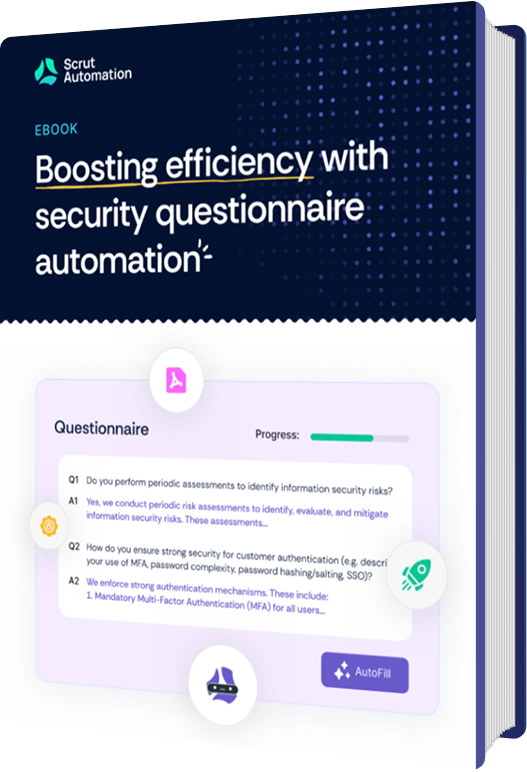
Security questionnaires aren’t hard because the questions are complex.
They’re hard because the process around them is fragile and under deal pressure, that fragility becomes visible fast
Every organization is asked the same things repeatedly, in different formats, under deal pressure. Answers live across documents, audits, tools, and people. Ownership is unclear. Sales wants speed. Security wants accuracy. Legal wants defensibility. Engineering gets pulled in when it shouldn’t.
Many teams look to security questionnaire automation as the fix. But automation on top of a broken process just moves the chaos faster.
What works in practice is a repeatable operating model: clear ownership, consistent answers, controlled reuse, and automation applied where it removes human error rather than introducing risk.
This ebook is not here to explain why questionnaires matter. You already know that.
Instead, it shows how experienced security teams actually run them at scale:
 Where answers live and how they stay currentHow repetitive questions are normalized safelyHow intake, triage, and review work without constant escalation
The goal is simple: Turn security questionnaires into a predictable system instead of a recurring fire drill.
Security questionnaires only become repeatable when the answers behind them are stable.
This chapter focuses on building a durable foundation that allows security answers to be reused safely, reviewed reliably, and defended confidently across customer questionnaires, audits, and sales cycles.
In practice, this foundation is built through four steps: defining a canonical answer structure, creating a high-reuse answer library, writing answers in customer language, and enforcing ownership and review cadence.

Step 1
Define a canonical answer structure

Step 2
Build a high-reuse answer library

Step 3
Write answers in customer language

Step 4
Assign ownership and review cadence
To make security answers reusable, they must follow a consistent structure. A canonical structure reduces ambiguity, supports review workflows, and ensures answers remain defensible over time.
At a minimum, each reusable answer should include:
This structure ensures every answer can be traced back to an actual control, reviewed for accuracy, and validated over time.
This structure enforces discipline and makes gaps visible. An answer without a named owner or recent review date should be treated as untrusted, regardless of how well written it is.
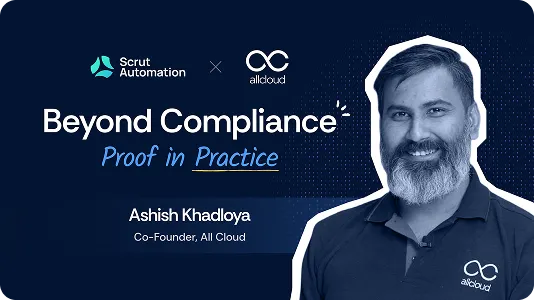
Before centralization, AllCloud relied on a single senior leader for accurate security questionnaire responses.
Answers were scattered across documents, and consistency depended on availability. Each questionnaire required manual rework, even when underlying controls remained unchanged.
You do not need to document every possible scenario upfront. The goal is not exhaustive coverage, but high reuse.
Start by identifying the questions that appear repeatedly across customer questionnaires and audits, even when phrased differently. These questions tend to cluster around a small set of operational areas where customers consistently seek clarity.

Identity and access management

Infrastructure and cloud security

Secure development lifecycle

Incident detection and response
These reusable answers may reference one or more underlying controls or standards. What matters is that they are written and managed as standalone, customer-facing responses that can be safely reused across questionnaires.
If a topic appears consistently in audits and customer questionnaires, it should exist as a reusable answer. This is how audits and questionnaires stop duplicating effort instead of creating parallel work.
Automation supports this approach by:
 Pulling supporting evidence automatically where feasibleFlagging answers with missing or incomplete documentationKeeping answers aligned as underlying controls or systems change
In mature teams, this answer library typically lives in a centralized system of record that supports versioning, evidence linkage, and review workflows, rather than ad hoc documents or spreadsheets.
Security questionnaires are not audits. They are read by customer security teams, procurement functions, and legal reviewers, often under time pressure.
Reusable answers must be written once, clearly, and in language that reflects operational reality without internal shorthand or policy citations.

We conduct access reviews for all employees and contractors quarterly.

Reviews are owned by the Security and IT teams and validate role-based and privileged access.

Discrepancies identified are remediated within 5 business days.

Supporting evidence is maintained and available upon request.
Clear answers reduce follow-up questions, prevent misinterpretation, and make reuse safer across customers.
Security answers degrade over time as systems, teams, and processes change. Without explicit ownership and review schedules, even accurate answers become liabilities.
Every reusable answer should have:
A named owner responsible for ongoing accuracyA defined review cadence aligned to the risk and volatility of the control“With Scrut, all I need to do is review the answers once. The system shows me exactly which documentation it’s using, and I step in only where judgment is required. That’s given me confidence that what goes out is accurate.”

For many controls, quarterly reviews are sufficient when underlying systems are stable. Higher-risk or frequently changing areas may require more frequent validation.

Tracking review status across the answer library

Prompting owners when reviews are due

Preventing stale answers from being reused in customer-facing contexts
When ownership and review are consistently enforced, the answer library becomes a living system rather than a document graveyard. This foundation is what makes standardization and automation possible in later stages.
Security questionnaires appear unique on the surface, but most are not. Across customers, industries, and deal sizes, the majority of questions repeatedly assess the same underlying security controls, even when phrased differently.
This chapter explains how to identify and standardize those recurring questions so answers can be reused safely, reviewed consistently, and defended confidently.
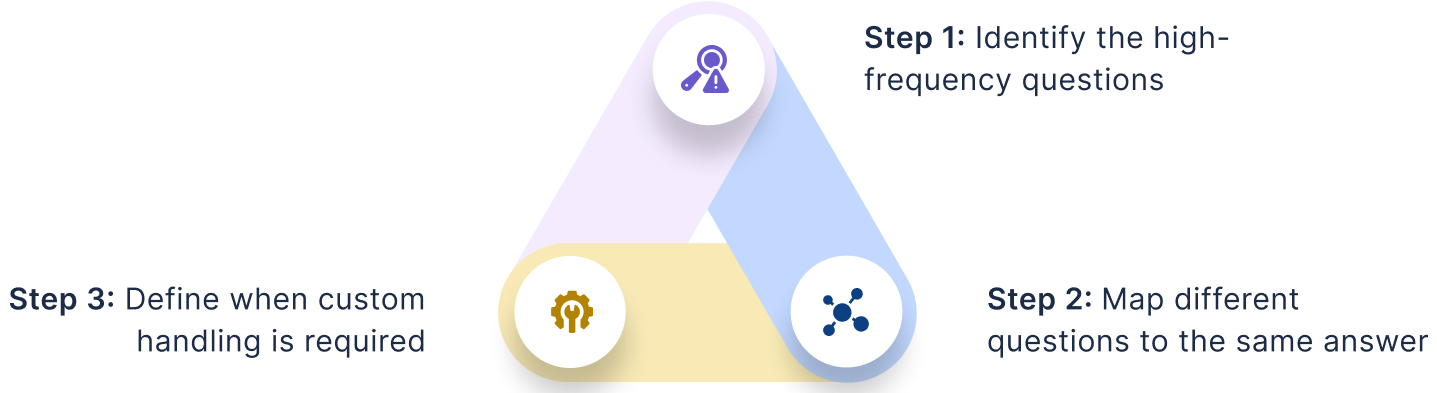
Standardization starts by accepting a simple reality: most questionnaires repeatedly probe the same operational areas.
Across customer reviews, these questions typically cluster around:
 Identity and access managementData protection and encryptionInfrastructure and cloud securitySecure development lifecycleIncident detection and responseVulnerability management
The same control may appear dozens of times under different phrasing. Treating each instance as a new problem introduces inconsistency and unnecessary effort.
The objective at this stage is not to answer everything. It is to isolate the questions that appear repeatedly and deserve standardized handling.
Once recurring questions are identified, the next step is to map them back to a single approved answer. Different wording often reflects the same intent:
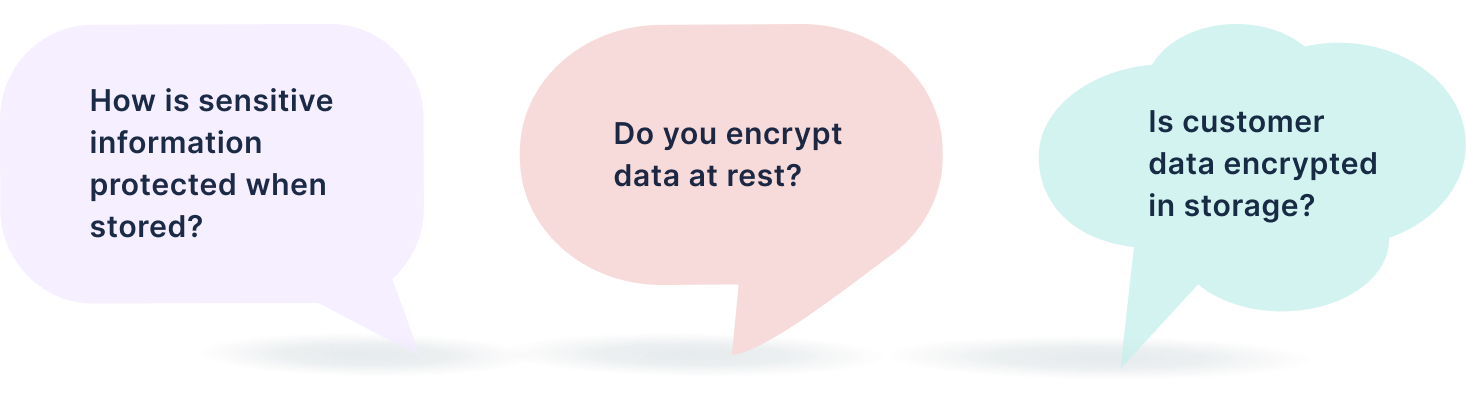
Rather than drafting three responses, mature teams anchor all three to one approved, control-backed answer. Context may vary slightly, but the core response remains stable.
This mapping is what makes reuse safe. It ensures answers are not reinvented based on who is responding or how the question is phrased.
Not every question should be standardized. The goal is to standardize what is repeatable and escalate what genuinely requires judgment.
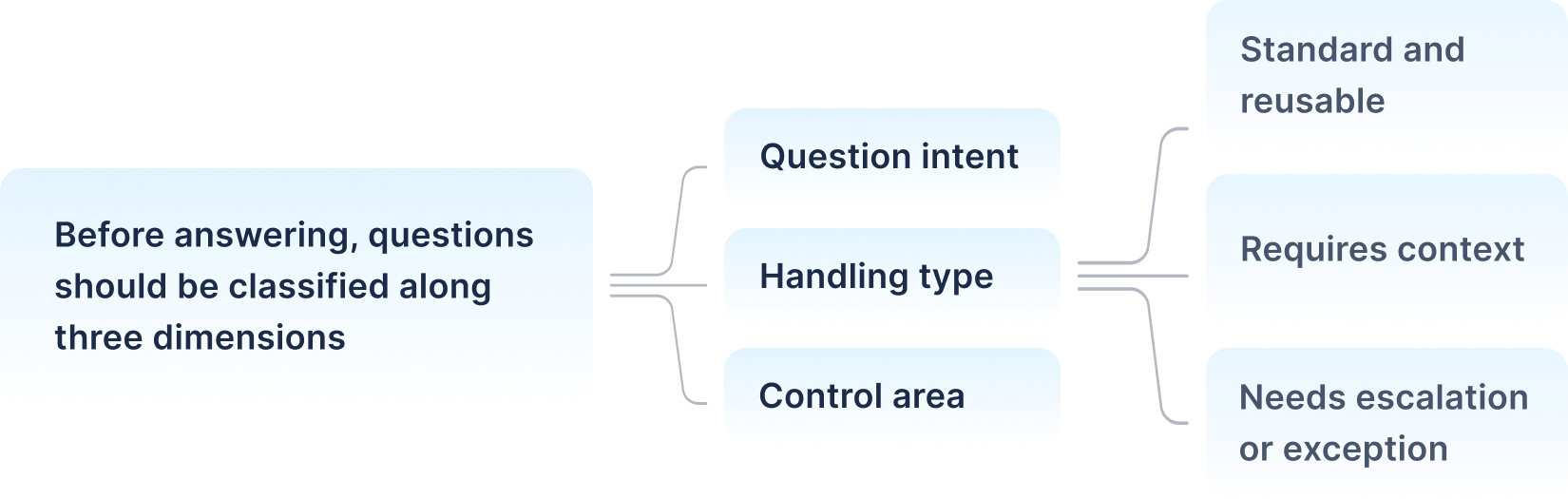
This classification prevents unnecessary custom work and highlights where deeper scrutiny is actually justified.
Automation supports this step by tagging questions, clustering similar phrasing, and surfacing approved answers instead of starting from scratch.
Standardization does not mean:
 Copy-pasting blindlyIgnoring customer contextOversharing evidence
When done correctly, standardization reduces response time and exposure instead of trading one for the other.
Security questionnaires are often where control gaps, ownership issues, and unclear scope finally surface. They don’t create these problems but expose them, usually under deal pressure and tight deadlines
When there is no agreed workflow, this exposure turns into breakdowns:
Gaps are discovered too late to remediate cleanlyDecisions are made ad hoc based on deal urgencyEngineering and legal are pulled in reactivelySales receives inconsistent timelines and answersThe failure is not the questionnaire. It is the absence of a defined way to handle what the questionnaire reveals.
This chapter defines a repeatable workflow that governs:
The objective is predictability under pressure:

Sales knows what to expect

Security controls risk deliberately

Gaps are handled transparently instead of being hidden
Here are 4 steps that break down the process to achieve a trustworthy repeatable workflow

Step 1:
Standardize intake and validation

Step 2:
Split standard answers from exceptions

Step 3:
Handle exceptions as risk decisions

Step 4:
Final review and accountability
Most failures in security questionnaires happen before a single question is answered.
Questionnaires often arrive with:
 unclear deadlinesmissing deal contextno indication of priority or risk
Security should not begin work until intake requirements are met.
At a minimum, sales must provide:
If this information is missing, the questionnaire should be returned. This protects security teams from reactive work and missed commitments.
Not every question deserves the same level of effort.
Most questionnaires contain:
Effective teams split work into two paths.
Auto-answered
Answers mapped to the system of recordPreviously approved responsesStandardized control questions
Manual review
 Exceptions and edge casesLegal or contractual implicationsAnswers mapped to the system of record
Security owns this triage. Engineering should only be involved when a question is genuinely new or the risk justifies escalation.
Some questions cannot be answered cleanly:
These are business decisions, not security busywork.
Effective handling requires:
Documenting the gap clearlyProposing alternatives or compensating controlsEscalating only what requires formal decision-makingSecurity frames the risk. Business owners decide whether to accept it.
Even with strong standardization and automation, security questionnaires should never be treated as fully hands-off. The final review exists to ensure that automated and reused answers still reflect the company’s current security posture and the specific customer context.
This step creates a clear point of accountability and prevents outdated, over-scoped, or misapplied responses from reaching customers.
The review confirms:

Accuracy against current posture

Consistency with prior responses

Alignment with legal language
Approved responses are then locked, submitted, and stored for reuse.
Security questionnaires are often where evidence risk finally becomes visible. Under audit conditions, evidence is shared in controlled contexts, with defined scope and reviewers. Under deal pressure, that same evidence is often reused reflexively without re-evaluating scope, currency, or exposure risk.
This is where evidence reuse breaks down. The issue is not that teams lack evidence. It’s that they lack a repeatable way to decide what evidence is safe to reuse, when, and why. This chapter explains how to reuse evidence in security questionnaires without turning routine responses into over-disclosure, misrepresentation, or follow-up risk.
Most questionnaire questions are process-oriented:
“How do you conduct access reviews?”“Describe your incident response process.”These questions are asking how a control works not for raw proof that it ran at a specific moment in time.
The common failure mode is responding to process questions with time-bound artifacts:
Access review exportsScan resultsIncident logsThis often happens under deal pressure, when teams default to “attach something” instead of explaining clearly.
Evidence should only be reused if the underlying control is:

Still implemented exactly as described

Current and reflective of the present operational state

Correctly scoped for the specific customer and request
Passing an audit or using previous evidence does not make it automatically safe to reuse.
Audit evidence is reviewed in a governed context. Customer questionnaires are not.
Each reuse decision should answer a simple question:
If the answer is unclear, the evidence should not travel.
Not all evidence carries the same reuse risk. Some artifacts describe how an organization operates and are generally safe to reference:
Security policiesControl descriptionsArchitecture diagramsVendor risk processesIncident response plansThese work best for process questions and portal-based questionnaires.
 By contrast, time-bound artifacts such as access reviews, scans, and incident logs should be shared only when explicitly required, and ideally through controlled references rather than raw files.
Most CISOs looking for security questionnaire automation are not confused about the problem. They are evaluating solutions because manual handling has already become unsustainable.
The mistake teams make at this stage is expecting automation to fix broken processes.
This chapter focuses on how automation platforms actually help and where human judgment must remain in the loop. The goal is to help evaluate platforms based on how they support standardized answers, evidence reuse, and review discipline, rather than expecting automation to fix broken processes.
The strongest automation platforms focus on repeatability and retrieval, not decision-making.
This is where teams consistently see time savings.

Evidence collection and synchronization: Automation can pull evidence directly from cloud providers, identity systems, code repositories, and monitoring tools. This keeps answers current without manual chasing.

Control status and review tracking: Instead of guessing whether an answer is still valid, automation shows ownership, scope, and last review date at the control level.

Answer reuse across questionnaires: Once answers are approved, automation allows teams to reuse them across vendor security questionnaires without rewriting.

Intelligent answer suggestions: AI-assisted tools can suggest responses based on verified controls and evidence, reducing drafting time while preserving consistency.
Not everything should be automated. Teams that move fastest know exactly where to stop. Here’s where automation should not replace humans:
If a tool claims to fully automate these decisions, that is a red flag.
Many teams already pass audits and still struggle with questionnaires. The missing piece is connection. Audits prove that controls exist. Questionnaires test whether those controls can be explained repeatedly, consistently, and confidently to customers.
This is where features like Scrut’s Trust Vault help teams move from compliance readiness to sales enablement.
A Trust Vault model works because it:
Connects controls directly to approved, audit-ready evidenceAllows responses to reference verified artifacts instead of raw filesMaintains scope, ownership, and review status automaticallyReduces over-disclosure by defaulting to controlled referencesFor sales teams, this means fewer follow-ups, faster security reviews, and more predictability. For security teams, it means confidence that every response reflects the real posture.
"Scrut’s Trust Vault provides the ease of use and metrics we need to secure customer trust and ensure our security communication is truly scalable for Nintex."

If you are comparing platforms, focus on how they support your process, not just their UI.
Key questions to ask:
Can answers be traced back to specific controls and evidence?Does the tool show ownership, scope, and last review clearly?How does it handle over-disclosure and sensitive artifacts?Where does AI assist, and where does it require approval?Can sales use it confidently without bypassing security?If a platform cannot answer these clearly, it will not scale with your deal volume.
The goal is not just faster responses. It is fewer decisions per questionnaire.
Teams that scale successfully:

Answer most questions automatically using a trusted system of record

Escalate only true exceptions that require human judgment

Reuse audit work carefully without misrepresenting scope or intent

Give sales confidence without compromising security accuracy
That is where security questionnaire automation truly pays off.
Many CISOs now agree that traditional questionnaires, when handled manually, create fatigue instead of real visibility. In fact, a majority admit that legacy approaches fall short, and more teams are moving toward AI-assisted assessment models to close the gap. That does not mean security questionnaires are obsolete. It means how they are run matters more than ever.
When questionnaires are treated as isolated tasks, they slow deals, fragment ownership, and disconnect audit work from customer trust. When they are run through a repeatable process, supported by the right level of automation, they become something else entirely. A reliable signal. A shared language with customers. A foundation for trust.
The teams that scale best do two things well:
This is what allows security teams to respond faster without losing accuracy, sales teams to move forward without constant escalation, and leadership to stay confident that every answer reflects the real security posture.
If you want to see how Scrut Teammates works in practice, including how it supports controlled answer reuse, evidence-backed responses, and human-in-the-loop reviews, schedule a demo with Scrut. We’ll show you how to turn security questionnaires into a scalable, defensible part of your security and revenue motion.

With Scrut, your security program isn’t just about keeping pace; it’s about setting the pace. Embrace the new kind of GRC that fuels growth and resilience.