

%20(1).png)


%201.png)
Choose risk-first compliance that’s always on, built for you.
Compliance accountability becomes a trap when you’re responsible for outcomes without the resources to deliver them. This 30-day plan helps you close that gap moving from “I own this” to “I can defend this with a clear program, current evidence, and leadership-backed decisions.”

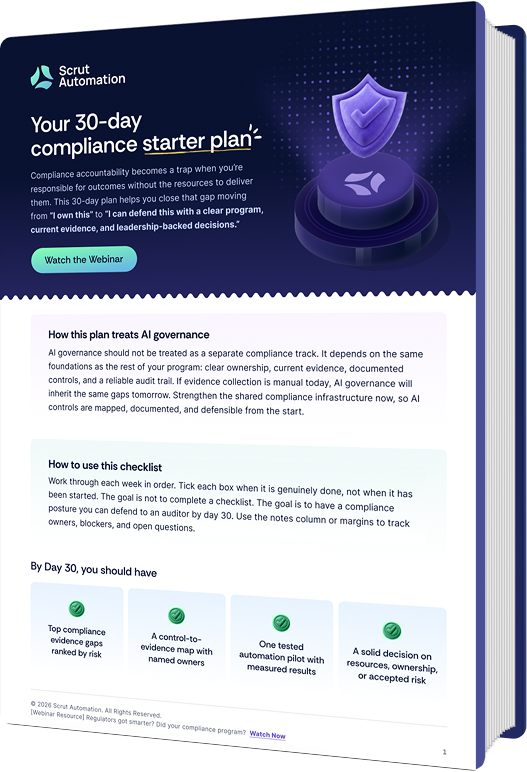
AI governance should not be treated as a separate compliance track. It depends on the same foundations as the rest of your program: clear ownership, current evidence, documented controls, and a reliable audit trail. If evidence collection is manual today, AI governance will inherit the same gaps tomorrow. Strengthen the shared compliance infrastructure now, so AI controls are mapped, documented, and defensible from the start.
Work through each week in order. Tick each box when it is genuinely done, not when it has been started. The goal is not to complete a checklist. The goal is to have a compliance posture you can defend to an auditor by day 30. Use the notes column or margins to track owners, blockers, and open questions.


Before you fix anything, you need to know what is broken. This week is about honest inventory, no optimism, no assumptions. The output is a prioritized list of your top three manual failure points.
Start with the obligation that has the nearest deadline, business impact, or greatest regulatory risk.
SOC 2 (attestation), ISO 27001 (certification), GDPR / HIPAA / CCPA / EU AI Act (regulations).
AI governance is the same infrastructure problem as your existing compliance work. Run the inventory now so you know your surface area before you design the fix.
A complete control-to-evidence map with named owners. A policy audit flagging out-of-date or unapproved documents. A shortlist of 2 to 3 automation tools that cover your full compliance surface, including AI governance. Initial technical documentation files are open for all high-risk AI systems.

Manual processes fail when ownership is unclear and evidence sources are undefined. This week, turn your gap list into a structured map, the prerequisite for any automation work.
A complete control-to-evidence map with named owners. A policy audit flagging out-of-date or unapproved documents. A shortlist of 2 to 3 automation tools that cover your full compliance surface, including AI governance. Initial technical documentation files are open for all high-risk AI systems.

Do not automate everything at once. Start with one use case, test it alongside the manual process, and clean up the data gaps it exposes. Automation only scales when the team trusts the output.
A working automation pilot with measured time-saving data. Validation that automated evidence output meets audit standards. A list of any configuration gaps to close before full deployment. An initial data point on AI governance evidence automation, if the tool supports it.

The accountability trap, being held responsible for outcomes you do not control, only closes when leadership understands the gap and commits to closing it. This week is about making that case clearly, with evidence.
“If leadership says no, the work is not over. The work is to document the decision and the risk, in writing, with the decision-maker's name on it. That single step shifts accountability back where it belongs, and ends the unfair version of the job.”
A working automation pilot with measured time-saving data. Validation that automated evidence output meets audit standards. A list of any configuration gaps to close before full deployment. An initial data point on AI governance evidence automation, if the tool supports it.

With Scrut, your security program isn’t just about keeping pace; it’s about setting the pace. Embrace the new kind of GRC that fuels growth and resilience.