




Choose risk-first compliance that’s always on, built for you.
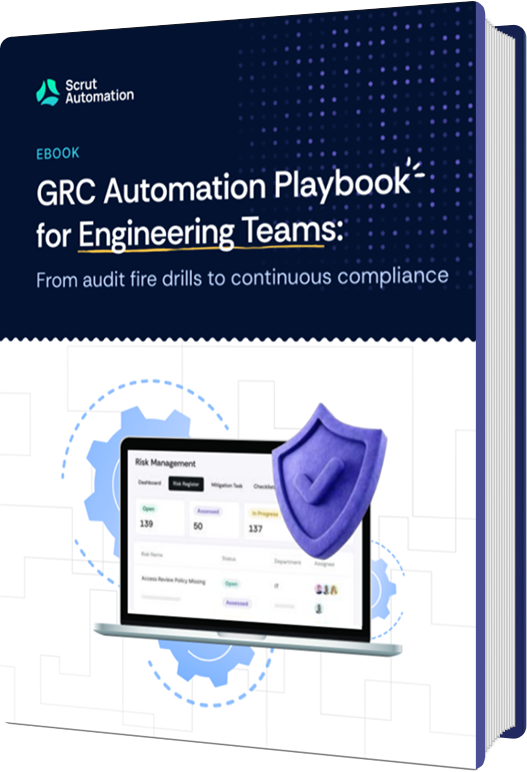
For engineering leaders tired of #SOC2-URGENT Slack channels: A technical playbook for embedding compliance into the systems that already enforce it.

Engineering teams rarely treat security as a separate task. It is built into how software ships. Access flows through identity systems, code moves through pull requests, and CI/CD pipelines enforce checks before production. In practice, systems are already doing the work of enforcing trust. The problem is not how security operates. The problem is how it is proven.
GRC still runs on a different model. Teams are asked to prove security through screenshots, spreadsheets, and periodic reviews. While systems operate continuously, evidence is collected over a period of time. This creates a disconnect between how security works and how it is validated.
This is the core pain point. Security runs continuously, but compliance does not.
The gap also exists between engineering and GRC auditors. Auditors think in controls and evidence; engineers think in IAM roles, pull requests, and deployment pipelines. Both describe the same system in different terms.
This mismatch creates real friction. Teams pause roadmap work to gather logs and screenshots to prove controls that are already running in production. The effort is not improving security. It is reconstructing it after the fact.
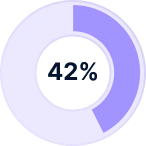
Research from McKinsey shows the scale of the gap. About 42% of organizations say their IT and GRC systems need major improvement, indicating many programs still struggle to keep pace with modern engineering environments.
This playbook proposes integrating GRC into engineering systems so compliance becomes a natural outcome of how they operate.
Securing an organization and proving that security exists are two different battles. For engineering leaders, the second one usually triggers a familiar pattern.
The moment an audit window opens, the organization shifts gears. Engineering velocity slows down, Slack threads like #SOC2-URGENT turn into the system of record, and teams start “doing compliance” instead of simply running secure systems.
The real cost isn’t the auditor. It’s the opportunity cost. High-leverage engineers get pulled away from product work and into low-leverage evidence collection, packaging screenshots and logs just to prove controls are working.
A second pressure is emerging: the control surface is expanding faster than teams can document it.
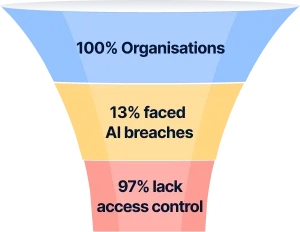
IBM’s 2025 breach research highlights that AI adoption is outrunning governance: 13% of organizations reported breaches of AI models/applications, and among those, 97% reported lacking AI access controls.
That matters to engineering leaders because it signals a simple trend: more systems will require provable governance, not fewer, and point-in-time evidence becomes less defensible as complexity rises.
Manual audit work interrupts engineering workflows. When an audit begins, engineers shift from building systems to documenting them. Slack channels like #SOC2-urgent fill with requests for logs, screenshots, and evidence.
The real cost is the disruption to engineering work. Instead of improving security controls, engineers spend days reconstructing proof that those controls already exist.
In the Risk Grustlers episode with Nicholas Muy, Siyavash says:
“The secret is for everybody to learn a little bit more than what they are doing and understand the other side of the table.”
Modern engineering stacks now include AI models, data pipelines, cloud services, and dozens of integrated tools. Each adds new configurations and permissions that must be governed.
IBM’s 2025 breach research shows the risk: 13% of organizations reported breaches involving AI models or applications, and 97% of those incidents lacked proper access controls.
The deeper problem is visibility. Traditional GRC relies on periodic reviews, so risks often remain hidden until an audit.
When GRC connects to infrastructure, repositories, and CI/CD systems, it becomes a shared risk dashboard. Issues surface in real time, and compliance evidence is generated automatically instead of being assembled manually.
Treating compliance as a seasonal event is the root of organizational friction, which creates a cycle of peak effort followed by a decaying security posture. Let’s break down how.
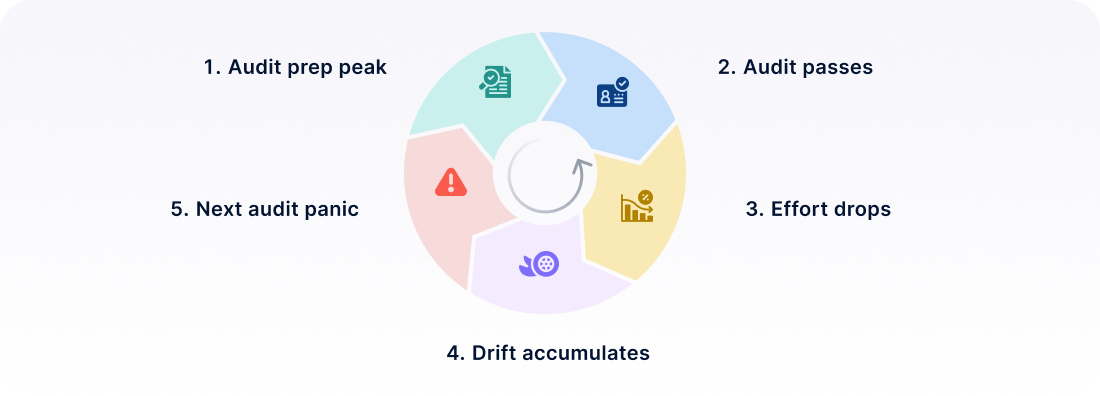
Many organizations treat compliance as a one-time project.
This approach fails for the same reason “security by annual penetration test” fails. It produces snapshots that become outdated quickly. A spreadsheet is not a control, and a screenshot is not an operating model. In cloud-first environments, change is constant.
New repositories appear, regions expand, services evolve, and SaaS tools are added. Without signals that reflect the current state of systems, a GRC program cannot honestly claim continuous readiness.
The result is bureaucracy layered on top of the stack. Teams end up doing the work twice: once to build the product and again to document it.
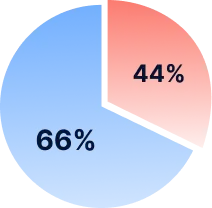
The scale of modern cloud environments makes the manual project model physically impossible to maintain without errors. According to the McKinsey 2025 Global GRC Benchmarking Survey, 66% of risk management functions operate with 20 or fewer full-time equivalents.
When resourcing is this limited, the project-based approach depends on heroic individual effort rather than resilient processes. Even a small configuration drift can push systems into non-compliance that remains unnoticed until the next audit cycle.
Compliance fails when it is documentation-driven and succeeds when it is system-driven. Not because documents are false, but because system-based controls produce a continuous audit trail of events, timestamps, identities, and enforcement outcomes under defined retention and access controls. The goal is not just to automate a mess but to adopt a new architecture. When GRC automation integrates with technical operations, compliance stops being a project and becomes a steady, continuously verifiable state.
Architecture matters most after the first audit. Many teams treat SOC 2 as the finish line, only to discover that enterprise deals soon require ISO 27001, GDPR, or HIPAA.
Because security requirements share common foundations, automation enables a “collect once, satisfy many” model where a single technical control maps to multiple frameworks; according to A-LIGN, SOC 2 and ISO 27001 overlap by about 43%, while HIPAA and SOC 2 share roughly 91% control alignment, allowing organizations to expand compliance through configuration instead of rebuilding processes.
The real advantage shows up at scale. Instead of recreating controls for every new requirement, the same system signals extend across frameworks, audits, and stakeholders. To make this work in practice, controls cannot remain abstract. They must be defined in a way that systems can enforce, measure, and continuously validate.
Building on this architecture, engineering teams must treat compliance as a technical requirement rather than a documentation exercise. This means translating high-level policies into executable logic through three core components:

A statement of what should happen (e.g., “All code must be peer-reviewed”).

The mechanism that ensures it happens (e.g., a GitHub branch protection rule).

The tamper-proof record proving the control worked (e.g., a signed PR log).
By treating controls as code, engineering teams stop “doing compliance” and start “maintaining systems.” This shift embeds security into the workflow, allowing the team to focus on the roadmap without the looming shadow of an audit fire drill.
In a manual world, you hope humans remember to document a crisis. In an event-driven world, documentation is a byproduct of the action.
A practical framework to define boundaries between autonomy and oversight. This model is dynamic, as AI proves itself and as governance strengthens, tasks can migrate between tiers.

Tier 1:
Fully automated
Description:
AI handles low-risk, high-volume tasks with clear rules and minimal variation.
Example use case:
Spam filtering, anomaly alerts, automated log parsing in real time.

Tier 2:
Human-in-the-loop
Description:
AI suggests actions; humans review and approve before anything is executed.
Example use case:
Vendor triage, policy checks, access revokes, triage incident alerts.

Tier 3:
Human-led, AI-informed
Description:
Humans lead complex decisions with AI providing insights and risk context.
Example use case:
GRC audits, breach plans, legal review, AI model approval processes.
A common myth is that technology can remove the human element from compliance entirely. But a practical categorization for an engineering org isn’t “always automatable vs never.” Its automation by function.
It requires knowing where machines excel and where human judgment is the final authority. To build a resilient program, categorize your tasks into three buckets.
These are technical checks that software can enforce continuously without human intervention. They are repetitive, high-volume tasks where manual verification creates unnecessary friction.
Examples include:
 Encryption verification: Systems continuously confirm that storage services and databases enforce encryption policies.MFA enforcement: Identity providers validate multi-factor authentication across all users.Vulnerability scanning: Scans trigger automatically on every commit or container build.
The engineering goal here is signal freshness. Systems should continuously verify the state of infrastructure and alert when controls drift. When these controls are enforced through infrastructure and APIs, compliance stops relying on screenshots and becomes a continuous stream of verifiable signals.
As Siyavash noted in a Risk Rustlers conversation with Nick Muy:
“Everybody thinks that GRC is for, yeah, go for your certifications, audit is gonna to be easier. I don’t know, continuous monitoring check. But I think that no, you can actually bring visibility to your organization by using, by properly using your GRC tool.”

Some processes still require human judgment, but systems can handle the operational work around them. For engineering teams, this means the platform collects data automatically while humans simply approve or reject actions.
Examples include:
 Access reviews: Systems flag inactive accounts or excessive permissions while managers approve changes through a simple workflow.Vendor security checks: Platforms collect vendor certifications and alert when documents expire, while leadership evaluates the actual risk.
Automation removes the operational burden while keeping decision authority with engineers and security leaders.
Some decisions cannot be delegated to software because they require context about product direction, business priorities, and acceptable risk.
Examples include:
 Risk tolerance: Leadership decides how much risk the organization is willing to accept when launching new features.Incident learning: Systems capture events, but engineering leaders determine how architecture or processes should evolve afterward.Policy exceptions: Occasionally, a product requirement conflicts with a security rule, and leadership must decide whether the trade-off is justified.
When these layers are clearly defined, compliance stops being a separate activity and becomes part of the engineering platform.
Systems enforce controls automatically. Workflows handle operational tasks. Leaders focus on architectural and strategic decisions.
Instead of engineers spending hours proving controls exist, the infrastructure itself continuously demonstrates that the system is operating securely.
Transitioning to GRC automation doesn't require halting engineering velocity. For a 200-person SaaS company, this phased roadmap integrates compliance as an embedded system in your infrastructure.
Connection phase
Key integrations:
AWS, GitHub, Okta, Jira (icons work best)
Primary owners:
Security lead; Platform / DevOps
Expected effort:
5–10 hrs (Security); ~2 hrs (DevOps)
Optimization phase
Key integrations:
CI/CD; automated evidence; alerting
Primary owners:
GRC lead; Engineering managers
Expected effort:
10–15 hrs (GRC); ~4 hrs (Engineering)
Validation phase
Key integrations:
Auditor view; trust center; reporting
Primary owners:
CISO; Sales lead; Auditor
Expected effort:
~5 hrs (CISO); ~2 hrs (Sales)
Your first goal is coverage, not perfection. Connect the systems that define your control surface: AWS, GitHub, Okta, and Jira.
Then build the inventory model: accounts, repositories, regions, and applications in scope. Without a complete inventory, green dashboards are meaningless because the population may be incomplete.
 Inventory completeness: Maintain a clear inventory of all sources and populations in scope, including repositories, cloud accounts, regions, and applications. This ensures monitoring and evidence collection reflect the full environment rather than a partial view.Technical execution: Connect your primary cloud provider (AWS), your version control (GitHub), and your identity source of truth (Okta). Link your ticketing system (Jira) to ensure that compliance tasks are tracked where developers already work.Defining ownership: Establish a RACI matrix. The platform team manages integrations and uptime, security defines policies and alert tuning, and the compliance vendor provides pre-mapped framework templates.Evidence durability: Archive logs with short retention windows, such as GitHub audit logs, so compliance evidence remains available after operational retention periods expire.Log integrity validation: Enable integrity checks for critical logs, such as AWS CloudTrail validation, to preserve tamper-resistant evidence.
Once the data is flowing, the focus shifts to refining the signals and building the "audit-ready" environment.
Automated evidence collection: Replace manual uploads with recurring automated evidence collection. The system should capture key signals continuously without human intervention.Tuning and cleanup: Work with the security team to suppress false positives so alerts reflect genuine compliance drift.Internal dry run: Run a metrics-driven audit rehearsal. Measure coverage percentage, evidence staleness, noisy controls, and MTTR for drift remediation. This reflects the continuous monitoring loop described by NIST: measure, analyze, respond, and improve.Expected effort: About 10 to 15 hours for the GRC lead to review controls and roughly 4 hours for engineering managers to resolve workflow gaps.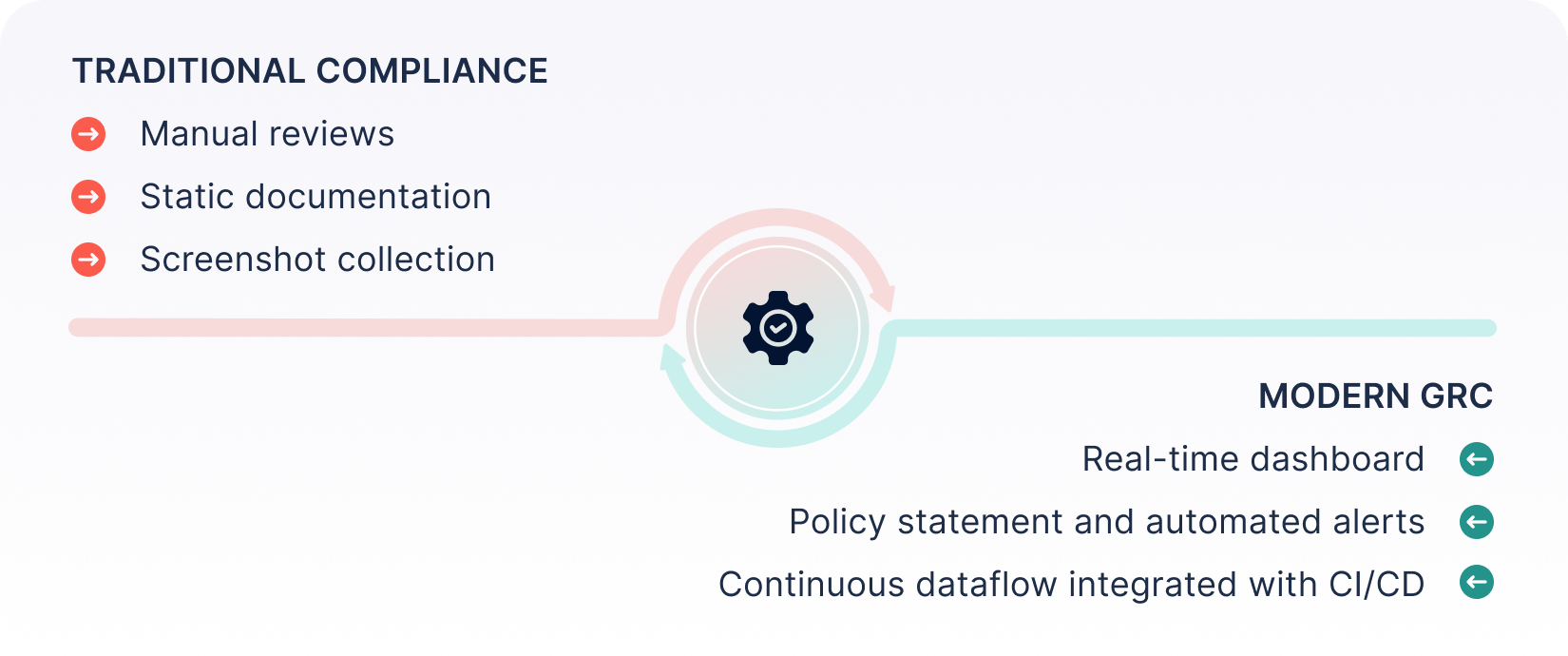
The final phase focuses on confirming that the automation pipeline produces reliable signals and reduces the operational noise that usually surrounds compliance. Provide auditors read-only access to the evidence environment where possible. Instead of exporting screenshots or documents, they can review control signals directly from the platform. Access should follow least-privilege principles, with all activity logged. This keeps audits transparent without adding risk and removes manual evidence collection.
Security posture visibility: Engineering leaders often receive ad hoc security requests from customers, partners, and procurement teams. Without a centralized view, these requests reach engineers. A centralized overview lets stakeholders access compliance posture and documentation directly, reducing repetitive requests and minimizing disruption to development.
Measuring operational impact: Once automation is fully integrated, quantify how much engineering capacity has been recovered. Track metrics such as:
These metrics show that compliance automation improves both governance and operational efficiency.
Most engineering leaders don’t spend time studying audit frameworks. What matters is simple: how to pass audits without pulling engineers away from building systems.
The good news is that auditors are not looking for hundreds of screenshots or long explanations. They are trying to answer three practical questions:
Is the evidence reliable?Does the system detect problems?Does the organization fix those problems quickly?If your systems answer those questions clearly, the audit becomes straightforward.
In manual audits, teams often submit screenshots to prove controls exist. The problem is that screenshots are fragile evidence. They capture a single moment and can be edited or misinterpreted.
Auditors place far more trust in system-generated evidence because it includes timestamps, system identities, and verifiable activity logs.
Examples of stronger evidence include:
Logs pulled directly from cloud infrastructureAudit trails generated by identity providersSigned commit and pull request historiesWhen data comes directly from systems like AWS, GitHub, or Okta, it carries metadata showing when an action occurred and who performed it.
For engineering teams, the goal is simple: let systems generate the proof automatically instead of recreating it manually.
No production system stays perfect forever. Configuration drift happens, permissions change, and new infrastructure appears.
Auditors are less concerned about whether failures happen and more concerned about how the system reacts.
A mature environment produces a clear sequence:

For example, if an automated check detects a misconfigured cloud resource, the system should create a ticket, assign ownership, and record when the issue was resolved.
This trail demonstrates that the organization monitors controls continuously and fixes problems quickly.
From an engineering perspective, this is simply incident management applied to compliance controls.
In traditional audits, auditors often review a small sample of activity. They might inspect a subset of pull requests or access changes to see whether controls are applied correctly.
This sampling approach exists because reviewing every event manually would take too long.
Automation changes that dynamic. When systems continuously monitor events such as pull requests, IAM changes, or infrastructure configurations, it becomes possible to evaluate the entire population rather than a small sample.
For engineering teams, this means fewer manual exports and fewer follow-up questions during the audit process. Instead of gathering data from multiple systems, teams can provide a consolidated view of activity across the environment.
Exceptions happen in every engineering organization.
A hotfix might bypass a standard deployment rule. A temporary permission might be granted to resolve a production issue.
What matters is not eliminating exceptions entirely but ensuring they are handled through a consistent process.
A mature system tracks exceptions by recording:
The reason for the exception.Who approved it.When it expires.When this process is handled through a platform rather than scattered documents, auditors can quickly understand the context without requiring engineering teams to reconstruct the story.
The most effective compliance programs do not rely on engineers preparing evidence every quarter. Instead, they rely on infrastructure that continuously records how systems operate.
When logs, controls, and monitoring signals are already captured automatically, the audit becomes a review of the system rather than a manual investigation.
For engineering leaders, the outcome is straightforward:

Engineers stay focused on product development.

Security teams maintain visibility into infrastructure.

Auditors review reliable system evidence instead of chasing screenshots.
When compliance is integrated into engineering systems, the audit stops being a disruption and becomes a routine checkpoint.
Experienced leaders know no system is “set & forget.” GRC automation reduces labor but adds dependencies. Resilience comes from designing systems to detect failure and recover quickly.
“I still think that what are the basics of cybersecurity. Your infrastructure should be secure. Your application should be secure, and your data level should also be secure.”
Treat your compliance pipeline the way you treat your deployment pipeline: design for failure, monitor the plumbing, and set SLOs.
Most issues aren't logic errors; they are failures of "plumbing" that create monitoring gaps:

Broken integrations: API updates in cloud providers or third-party services can stall evidence flow.

Credential expiry: Expired service tokens or unrotated keys can blind the system to your infrastructure.

Control drift: New cloud regions or resources may be spun up without automated checks being applied to them.

Alert fatigue: Poorly tuned systems create noise. When alerts are constant, teams ignore the ones that actually matter.
A “silent failure”, where a control stays green only because the data feed is dead, is a GRC lead’s worst nightmare. You must apply the same rigor to GRC as you do to production:
Meta-monitoring: Regularly verify the health of integrations.Heartbeat checks: If the system hasn't successfully polled a source (like AWS) in 24 hours, it should trigger a high-priority alert.Auditors value a functioning feedback loop over a claim of perfection. They are more impressed by a documented fix than a clean record with no history.
Auto-ticketing: When a failure is detected, the system should automatically open a Jira ticket, moving recovery into the existing sprint cycle.Documented resilience: Keep a log of automation failures and their resolutions. This proves to auditors that you have a mature, self-healing process.GRC automation works best when it becomes part of the engineering stack rather than a separate audit project.
Platforms like Scrut integrate with cloud infrastructure, repositories, and identity systems to automatically collect signals, monitor controls, and map them to compliance frameworks, removing the need for engineers to assemble evidence manually.
When controls operate within everyday workflows, compliance shifts from periodic disruption to predictable infrastructure, similar to a CI/CD pipeline. Engineering teams regain time previously spent on audit preparation while security leaders gain continuous visibility into control health.
This playbook outlined a practical path through a 30/60/90-day rollout plan that integrates monitoring, controls, and evidence generation directly into the engineering environment


With Scrut, your security program isn’t just about keeping pace; it’s about setting the pace. Embrace the new kind of GRC that fuels growth and resilience.