


Choose risk-first compliance that’s always on, built for you.
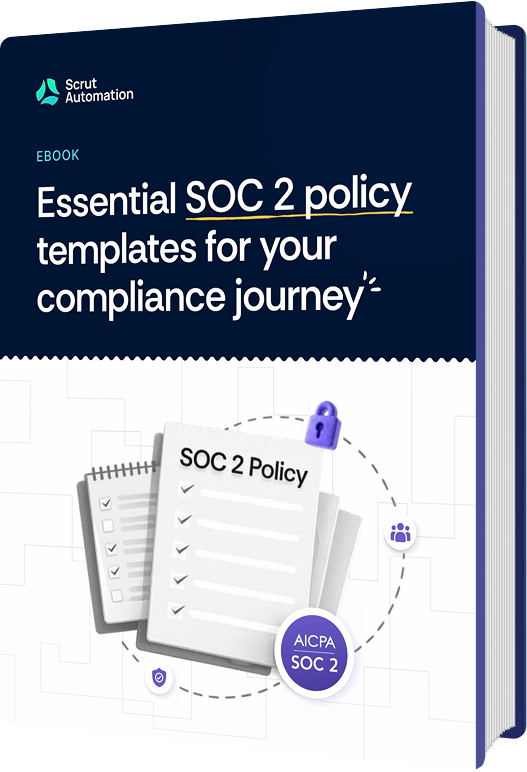
For GRC leads, CISOs, and heads of security scoping their SOC 2. 25 policy templates organized by audit criticality, with the audit realities that determine whether they hold up.

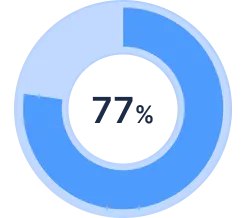
In a recent Thomson Reuters Institute 2025 C-Suite Survey, 77% of executives noted that compliance is no longer just a checkbox to actively shape business strategy and outcomes. For CISOs and Heads of Security, that shift makes SOC 2 more than an audit milestone.
It becomes a critical tool for building trust, reducing friction in buyer conversations, and supporting scale in an increasingly risky digital environment.
What catches many teams off guard is that the American Institute of Certified Public Accountants (AICPA) does not provide an official library of SOC 2 policy templates. This lack of official SOC 2 policy templates often leaves organizations to figure out the complexities of the Trust Services Criteria on their own.
The true challenge for a GRC Lead is not just finding documents but avoiding the trap of using inconsistent or unenforceable language that creates gaps between intent and reality.
This guide offers a foundational set of SOC 2 policy templates, prioritized by audit criticality and business impact, to help you move forward with confidence.
Please note: these sections are intended as structured outlines to point you in the right direction.
That said, deploying policy templates alone does not get you there. Compliance takes shape when policies are backed by real system activity, continuous evidence, and clear ownership.
Defining the scope of your audit is the first step in understanding which SOC 2 policies your organization will need. Because SOC 2 is a flexible framework, policy requirements vary based on the Trust Services Criteria (TSC) included in your audit. This decision is often influenced not only by technical needs but also by data sensitivity and enterprise customer expectations.
The Security criteria, also called the Common Criteria, are mandatory and included in all SOC 2 audits. It requires foundational policies covering governance, risk assessment, access control, and incident response. For many startups, this serves as the starting point of their compliance journey.
As your business grows, additional criteria often become strategic necessities:

Confidentiality:
This is increasingly expected for SaaS providers handling proprietary or sensitive customer data. The recent CBIZ 2024 SOC Benchmark Study found that the inclusion of the Confidentiality category in SOC 2 reports nearly doubled in just one year, growing from 34% in 2023 to 64.4% in 2024. This reflects how often Confidentiality has become a non-negotiable requirement in enterprise deal cycles.

Availability:
If your value proposition includes specific uptime guarantees or service level agreements (SLAs), you will need detailed Business Continuity and Disaster Recovery (BCP/DR) policies. According to the same study, Availability remains the second most common category, appearing in 75.3% of all SOC 2 reports.

Privacy and processing integrity:
These are highly context-dependent and are typically required when handling regulated personal data or managing complex, high-volume transactions.
The policy depth is shaped by three factors - the Trust Services Criteria you select, the sensitivity of the data you manage, and the level of customer assurance needed to support enterprise deals. Not every policy carries the same weight, nor does every requirement require the same level of documentation maturity at the same time.

By understanding this tiering logic, you can prioritize the documentation that has the highest impact on your audit success and your revenue goals.

Security
(Mandatory, all SOC 2 audits)
 GovernanceRisk assessmentAccess controlIncident response

Availability
(Common, 75.3% of reports)
 Business continuityDisaster recoveryBackup and restoration

Confidentiality
(Growing, 64.4% of reports)
 Data classificationEncryptionVendor riskData retention

Privacy
(Situational)
 Privacy policyProcessing integrity controlsData input validation
Organizing policies by criticality enables security and GRC leaders to focus first on the controls auditors examine most closely, accelerating progress toward audit readiness.
| Tier | Why it exists | TSC alignment |
|---|---|---|
 Critical |
These are the non-negotiables required for every single SOC 2 audit to establish basic governance. | Security (Common Criteria) |
 Important |
These are increasingly standard for SaaS companies and are frequently requested during enterprise due diligence. | Availability, Confidentiality |
 Recommended |
These represent a higher level of organizational maturity and are driven by specific data types or complex workflows. | Privacy, Processing Integrity |
Selecting the right number of policies is a balancing act. Too many or too few can both weaken your compliance program.
Adopting too many policies often stems from a desire to appear highly secure, but each policy becomes a commitment to auditors.
If your team cannot maintain them, gaps in evidence and reviews emerge, leading to audit exceptions and operational slowdowns.
On the other hand, too few policies can signal immaturity. While a minimal set may cover basic security criteria, it may fall short during vendor risk assessments. Enterprise buyers often expect broader documentation, and thin policies can lead to deeper scrutiny or lost deals.
Before selecting SOC 2 policy templates, remember that an audit does not evaluate documentation alone. It evaluates whether your organization actually follows the policies.
Keeping the following practical guardrails in mind can help you avoid common audit findings.

Auditors verify that your operations comply with your policies. If your policy says access is reviewed every 30 days, but the process runs quarterly, it creates an audit exception.

Templates must reflect real engineering workflows. A generic change management policy will not align with your team’s specific CI/CD tools and processes.

Every policy needs a defined owner. Without assigned responsibility, policies are rarely maintained or enforced, weakening governance.

SOC 2 expects policies to be reviewed at least annually. Organizations must show evidence that leadership has approved the latest version.

Auditors often verify whether employees have read and accepted policies. Simply storing documents in a shared drive is not sufficient.

The templates in this ebook provide structure and guidance, but they are not full auditor-ready policies.
Within the Scrut platform, you gain access to comprehensive policy templates designed by compliance experts and mapped to SOC 2 requirements. You can customize them to match your environment or draft policies directly in the platform and have them reviewed by the in-house experts.
This helps ensure your policies align with both your real operations and audit expectations. Now, let’s look at the SOC 2-ready templates!

The following set of documents forms the mandatory foundation for any SOC 2 audit.
These critical tier SOC 2 policies anchor the Security Trust Services Criteria and are the first items a service auditor will examine to verify your governance and technical safeguards.
Critical
12policies
The audit foundation. Required for every SOC 2 engagement.
 Security TSC
Important
7policies
Increasingly standard. Expected by enterprise buyers in deal cycles.
 Availability & Confidentiality TSC
Recommended
6policies
Signals maturity. Driven by data type and regulatory exposure.
 Privacy & Processing Integrity TSC
While the Security criteria form the mandatory core of your audit, the following important SOC 2 policies often determine whether you can close enterprise deals.
Large organizations rarely evaluate vendors solely on security. They also look for assurance that the service will remain reliable and that their proprietary data will be handled responsibly.
These policies show that your organization can maintain service availability and protect sensitive data over time.
If your business provides a service level agreement (SLA) to customers, these policies are essential. They prove that you have planned for the unexpected and have the technical means to recover from system failures.
These policies focus on the lifecycle of sensitive data and the third parties that may have access to it. This is a high priority for customers in regulated industries or those sharing intellectual property.
As your organization matures and expands its compliance footprint, the following recommended SOC 2 policies become important. While they may not be required for a baseline Security TSC audit, they support broader framework expansion and strengthen your overall security posture. These policies are often shaped by environmental factors such as remote work environments or the handling of regulated personal data.
| Organizational signal | Policy it triggers |
|---|---|
 You handle regulated personal data |
Privacy policy |
 You manage high-volume or complex transactions |
Processing integrity controls policy |
 Your headcount is growing with contractor access |
Acceptable use policy |
 You operate a distributed or hybrid workforce |
Remote work / BYOD policy |
 You are scaling teams or pursuing enterprise deals |
Code of conduct |
 You have on-site offices or workstations |
Physical security policy |
Customizing SOC 2 policy templates turns generic documents into an audit-ready security program. For SaaS companies, policies must accurately reflect the technical environment and operational workflows.
Key Insight for a GRC Lead: Never include commitments you cannot evidence. If your policy claims weekly access reviews but the process happens quarterly, you create an audit exception.
In the world of GRC, confusion between different types of documentation often leads to audit friction. Many organizations believe that simply having SOC 2 policy templates is enough to pass an audit, but a policy is only the first layer of a much larger structure.
To be audit-ready, a Compliance Manager must understand how high-level mandates translate into the technical proof that auditors require.
| Element | Purpose | Practical example |
|---|---|---|
| Policy | What must be done. It is the high-level mandate or rule. | All employees must use multi-factor authentication (MFA) to access company systems. |
| Procedure | How it is done. It provides the step-by-step instructions for the team. | The specific steps for an employee to set up an authenticator app during onboarding. |
| Control | The mechanism enforcing it. It is the technical or manual check in place. | A configuration in the identity provider that prevents login unless MFA is active. |
| Evidence | Proof it occurred. It is the data that verifies the control is working. | A system-generated report or log showing MFA is enabled for all active users. |
This relationship creates a logical workflow: Policy → Procedure → Control → Evidence → Audit Test.
Downloading SOC 2 policy templates alone is insufficient, as it addresses only the “what” without accounting for the “how” or supporting evidence.
During an audit, a CISO must show that the policy led to a procedure, which was enforced by a control, resulting in the evidence the auditor is now reviewing.
If any link in this chain is broken, the auditor may find the control ineffective, regardless of how well-written the original policy document is.
As you use the templates in this guide, keep in mind that each policy should eventually connect to a procedure, a control, and supporting evidence.

Copying ISO templates without tailoring them to SOC 2 requirements

Multiple policy versions are circulating internally

Missing annual review cycles

No employee acknowledgment tracking

Writing policies after controls already exist

No clear link between policies and evidence

Overpromising remediation timelines

Assigning ownership to departments instead of roles

Ignoring subservice provider security

Missing executive approval
Free templates help you get started, but they often lack the structure required for audits. They often miss TSC mapping, control cross-references, ownership matrices, evidence guidance, version control workflows, and alignment with other standards like ISO 27001 or HIPAA.
As companies grow, policies must evolve from static documents into a managed system. A mature compliance program includes automated control mapping, assigned owners, structured review workflows, evidence integrations, multi-framework reuse, and audit-ready exports.
Platforms like Scrut enable organizations to manage policies centrally, ensuring documentation actively supports security operations rather than becoming an administrative burden.
Take the sandbox demo of GRC automation in an interactive Scrut environment.

With Scrut, your security program isn’t just about keeping pace; it’s about setting the pace. Embrace the new kind of GRC that fuels growth and resilience.