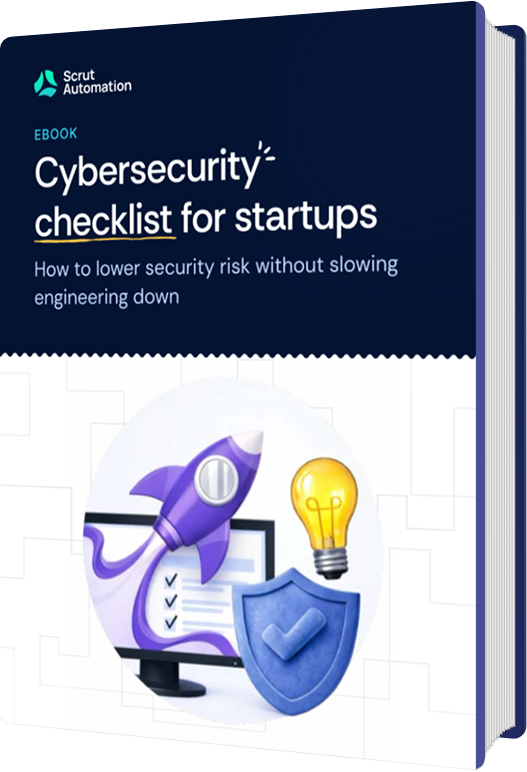
Lower security risk without slowing engineering down
For engineering leaders at seed to Series B companies without a full-time CISO. A layer-by-layer checklist of the controls that must exist now and the ones that can safely wait.
Startup cybersecurity checklist to reduce preventable risk
Cybersecurity rarely fails because of advanced attacks. It fails when basics are unclear, ownership is fuzzy, or a small decision quietly opens a large gap.
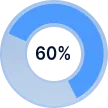
The 2025 Verizon Data Breach Investigations Report shows that approximately 60% of breaches still involve human elements such as credential misuse, misconfigurations, or simple errors.
That pattern holds across startups. Incidents usually stem from overlooked fundamentals, not cutting-edge exploits. Access is granted and never reviewed. Cloud resources default to exposed. Logs exist, but no one checks them. None of this feels urgent until it suddenly is.
This is where a practical cybersecurity checklist matters. It helps you focus on controls that reduce risk at your current stage, without slowing delivery or adding unnecessary complexity. More importantly, it helps you decide what must exist now and what can safely wait.
This checklist is designed to close execution gaps early, build defensible security habits, and prevent security debt that becomes painful to unwind later.
This checklist is intended for:
VP or Head of Engineering, CTO, or Head of Platform role
Seed to Series B companies with cloud-native infrastructure
Teams handling identity, customer, or sensitive business data
Organizations without a full-time CISO
Is minimum viable security actually “good security”?
For early-stage teams, good security is often misunderstood. It is not about sophisticated controls or enterprise-grade tooling. It is about fitness for purpose at your current stage.
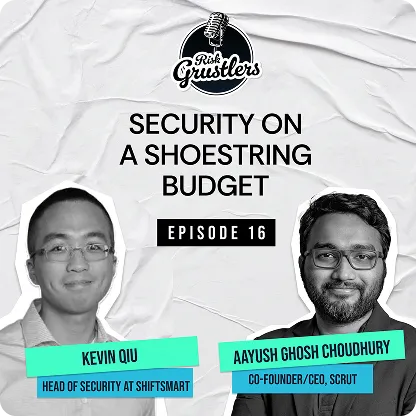
“For B2B organizations, using a compliance framework like SOC 2 or ISO 27001 is a great starting point. Compliance can drive your security efforts because these frameworks include fundamental controls that overlap and provide a solid foundation.”
Kevin Qiu,
Head of Security at Shiftsmart
In practice, this means:
Reducing obvious, preventable risk before pursuing advanced controls
Prioritizing ownership and consistency over tooling depth
Avoiding over-engineering driven by audit or buyer pressure
Designing controls that reflect how your team actually works
Most startups move through three phases:
Minimum viable security focused on reducing immediate risk
Audit-ready security focused on repeatability and evidence
Revenue-ready security focused on speed and confidence during growth
Problems arise when teams attempt to skip ahead. Implementing later-stage controls without strong foundations leads to tool sprawl, brittle processes, and security programs that look impressive but fail under scrutiny.
This matters because small businesses are not “too small to notice.” Attackers increasingly target them precisely because they move fast and often lack foundational defenses. Industry data confirms this reality.
In Total Assure’s 2025 analysis, nearly 46 percent of small businesses reported experiencing a cyberattack, with incidents occurring roughly every 11 seconds. Average losses were around $120,000 per breach, alongside widespread gaps in basic readiness. Mastercard’s global survey of small and mid-sized businesses reports similar findings, including cases where attacks led to shutdowns or bankruptcy.
Kevin Qui emphasizes starting with your company’s mission and then identifying the risks that could disrupt it. These might include missing customer expectations or relying on an unreliable cloud provider. He notes that you do not need deep security expertise to recognize these risks.
As you begin generating revenue and courting enterprise buyers, security becomes externally visible.Enterprise customers care about consistency, traceability, and evidence of controls. At this stage, good enough expands to include documented access reviews, separation of environments, and monitored configuration changes.
Inconsistent or informal practices that were adequate during early development often become blockers in customer security reviews. Which is why we’ve created this checklist to help you build minimum viable security that can evolve into audit-ready security without disruption, as you progress.
How to apply this checklist effectively in real workflows
This checklist is a working reference, not a one-time exercise. Use it to guide security decisions as your team, systems, and risk profile evolve.
Start by reviewing one layer at a time rather than attempting the entire checklist at once. For each layer, confirm whether the listed controls exist, operate consistently, and have clear ownership.
How to think about ownership in this checklist
Throughout the checklist, you will see different owner types such as security owner, platform owner, system owner, identity owner, or infrastructure owner. These labels describe responsibility, not job titles.
In an early-stage startup, many of these roles are often held by the same person, commonly the Head of Engineering or the first senior engineer who also acts as the security owner, platform owner, and system owner at the same time.
As the company grows, these responsibilities naturally split. Platform ownership may move to a dedicated platform or SRE team. Identity ownership may sit with IT or security. System ownership may be distributed across engineering teams.
What matters is not how many people you have, but that each control has a clearly identified owner who:
Has the access needed to make changes
Has the authority to make decisions
Understands they are accountable for that control
Controls without ownership should be treated as gaps, even if they technically exist.
How to interpret “applies to” and priority in these checklists
Each control also specifies who it applies to and how urgent it is.
“Applies to” clarifies the scope of the control. Workforce typically refers to employees, contractors, and internal users. Production refers to live systems, data, and environments that support customers or the business.
Priority indicates relative urgency, not audit importance.
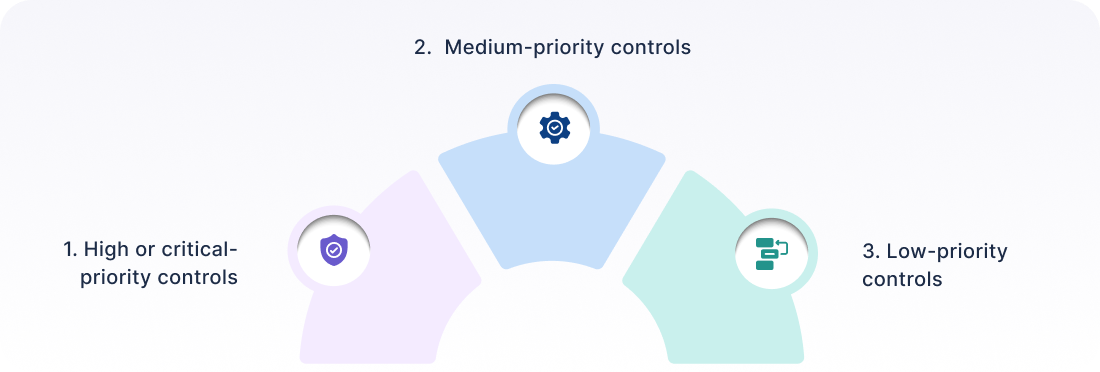
High or critical-priority controls address preventable risks that can cause immediate or widespread impact and should be implemented as early as possible.
Medium-priority controls reduce risk as complexity increases and should be planned as the team and environment mature.
Low-priority controls improve resilience and hygiene over time and can follow once the foundations are stable.
Priority helps you sequence work. It is not a signal to ignore lower-priority controls indefinitely.
Understanding the cybersecurity stack behind this checklist
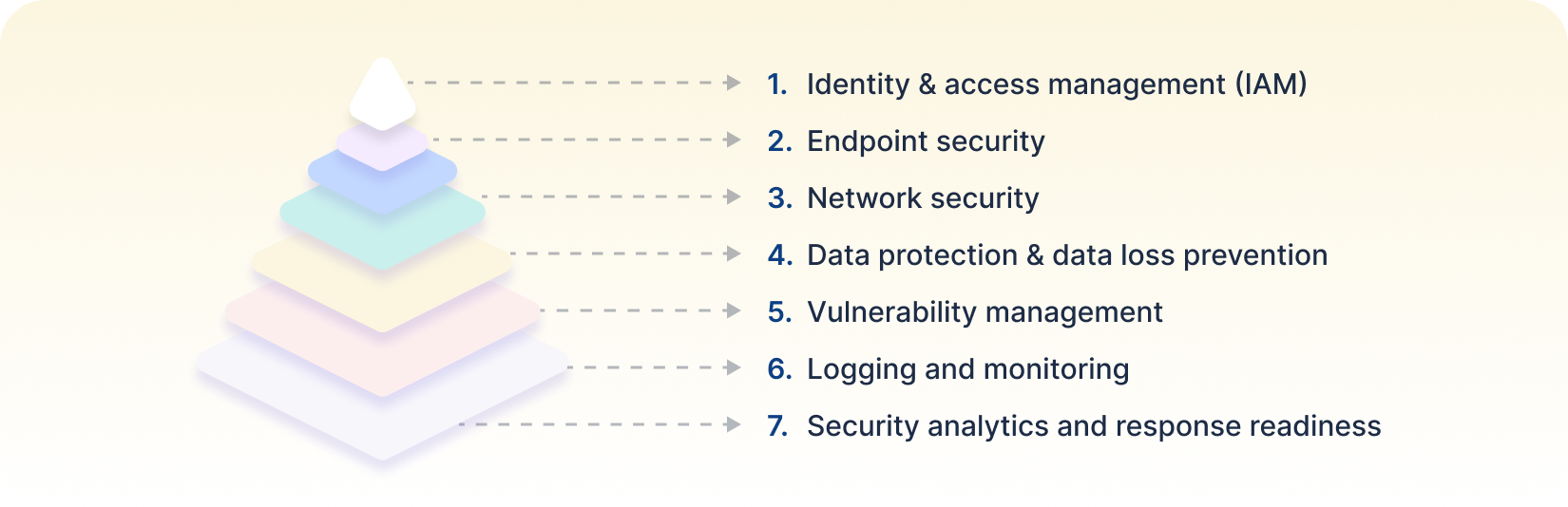
Cybersecurity is most effective when it is treated as a system, not a collection of isolated controls. The cybersecurity stack refers to the core layers of security capabilities that work together to protect your environment, detect issues, and limit the impact when something goes wrong.
For early-stage startups, the value of thinking in terms of a cybersecurity stack is clarity. It helps you avoid over-investing in one area while leaving gaps elsewhere.
Key components of the cybersecurity stack
Each layer addresses a different type of risk.
This checklist is organized around the cybersecurity stack so you can assess coverage across all critical areas, assign ownership clearly, and strengthen security in a balanced, intentional way.
The sections that follow walk you through a checklist for each layer of the cybersecurity stack, starting with identity and access management, which forms the foundation for everything else.
The cybersecurity checklist by 7 layers: What you must cover
This cybersecurity checklist is built to remind you that you do not need to implement everything at once. The goal is to ensure that each layer is present at a level appropriate to your stage, operates consistently, and reflects how your team actually works.
1. Identity and access management (IAM)
Identity and access management defines how users and services authenticate, what they are allowed to access, and how access is removed when it is no longer needed. Done early, IAM reduces preventable risk and becomes the foundation every other security control relies on.
“Access management is crucial. Initially, everyone might have access to everything, but as your team grows, you should start restricting access. For example, if your CEO no longer writes code, they shouldn’t have AWS access. This not only enhances security but also saves money on SaaS subscriptions.”
Kevin Qiu
Head of Security at Shiftsmart
Each layer addresses a different type of risk.
This checklist is organized around the cybersecurity stack so you can assess coverage across all critical areas, assign ownership clearly, and strengthen security in a balanced, intentional way.
The sections that follow walk you through a checklist for each layer of the cybersecurity stack, starting with identity and access management, which forms the foundation for everything else.
A. Identity foundations
IAM control
Owner
Applies to
When it should be applied
Priority
Impact of non-implementation
Use a single centralized identity provider for workforce access
Grant access based on role rather than convenience
System owner
Workforce and Production
Once roles begin to diverge
High
Excess permissions increase blast radius
Define and limit privileged roles
Cloud access owner
Production
When a production environment exists
High
Privileged access spreads without control
Provision access through a repeatable joiner process
Identity owner
Workforce
When the headcount exceeds single digits
High
Ad hoc access leads to inconsistent permissions
Update access when roles change
Identity owner
Workforce
When role changes become routine
Medium
Access drifts from real responsibilities
Revoke access immediately upon exit
Identity owner
Workforce and Production
From the first termination or role exit
Critical
Former users may retain access
C. Service and non-human access
IAM control
Owner
Applies to
When it should be applied
Priority
Impact of non-implementation
Maintain an inventory of service and API accounts
App owner
Production
When the first service account is created
High
Hidden identities create unmanaged access paths
Assign ownership to all service and API accounts
App owner
Production
At the time of creation
High
Orphaned credentials remain active
Store secrets in a centralized secrets manager
Platform owner
Production
Before production workloads scale
Critical
Exposed secrets can be reused silently
Prevent secrets from being committed to code or configs
Platform owner
Production
From the first production deployment
Critical
Credential leaks spread via repos and CI
Rotate service credentials on a defined schedule
Platform owner
Production
Once credentials persist beyond initial setup
Medium
Long-lived credentials increase exposure
D. Access review and hygiene
IAM control
Responsible individual
Applies to
When it should be applied
Priority
Impact of non-implementation
Periodically review privileged access
Cloud access owner
Production
Once access stabilizes
Medium
Excess access persists unnoticed
Remove access that is no longer required
System owner
Workforce and Production
During each review cycle
Medium
Temporary access becomes permanent
2. Endpoint security
Endpoint security focuses on controlling system risk by enforcing basic protections like authentication, encryption, updates, and recovery. Teams reduce exposure from everyday device use without introducing heavy tooling or operational drag.
A. Device baseline
Endpoint security control
Responsible individual
Applies to
When it should be applied
Priority
Impact of non-implementation
Maintain an inventory of all company-owned and BYOD devices
Device access owner
Workforce
As soon as personal devices access the company systems
High
Unknown devices create unmanaged access paths
Require device-level authentication and screen locks
Device access owner
Workforce
From the first laptop issued
High
Lost or stolen devices expose accounts and data
Enforce full-disk encryption on laptops and workstations
Device access owner
Workforce
Before storing customer or sensitive data
High
Physical device loss leads to data exposure
B. Patch and configuration hygiene
Endpoint security control
Responsible individual
Applies to
When it should be applied
Priority
Impact of non-implementation
Keep operating systems up to date
Device access owner
Workforce
From the first production deployment
High
Unpatched systems are easy exploitation targets
Keep critical applications and browsers updated
Device access owner
Workforce
Once tools become part of daily work
Medium
Known vulnerabilities remain exploitable
Disable insecure defaults on endpoints
Platform or device owner
Workforce
As baseline images are created
Medium
Default settings weaken endpoint defenses
C. Device control and recovery
Endpoint security control
Responsible individual
Applies to
When it should be applied
Priority
Impact of non-implementation
Enable remote wipe for lost or stolen devices
Device access owner
Workforce
When devices access production or sensitive systems
High
Lost devices retain access to systems and data
Restrict access to sensitive systems from unmanaged devices
System owner
Production
When sensitive systems are introduced
High
Personal devices bypass security controls
Define expectations for personal device usage (BYOD)
Identity or device owner
Workforce
When BYOD becomes common
Medium
Inconsistent security posture across devices
D. Malware and endpoint protection
Endpoint security control
Responsible individual
Applies to
When it should be applied
Priority
Impact of non-implementation
Deploy basic endpoint protection on all workstations
Device access owner
Workforce
Before customer data is handled locally
Medium
Malware infections go undetected
Ensure endpoint protection is tamper-resistant
Platform or device owner
Workforce
Once endpoint tooling is deployed
Low
Users can disable protections unintentionally
E. Endpoint visibility and ownership
Endpoint security control
Responsible individual
Applies to
When it should be applied
Priority
Impact of non-implementation
Assign ownership for endpoint security decisions
Security or platform owner
Workforce
As the endpoint footprint grows
Medium
Issues fall between teams
Periodically review endpoint access and posture
Device access owner
Workforce
When the headcount grows beyond the early team
Low
Risk accumulates unnoticed
3. Network security
Network security establishes intent. It restricts reachability to what is necessary, separates environments to contain impact, and defines secure access paths. When these boundaries are set deliberately, teams reduce attack surface while maintaining development velocity.
A. Exposure control and access boundaries
Network security control
Responsible individual
Applies to
When it should be applied
Priority
Impact of non-implementation
Restrict network access to only what is required
Infrastructure owner
Production
From the first production deployment
High
Unnecessary exposure increases the attack surface
Avoid exposing services publicly unless required
Application owner
Production
Before public endpoints are introduced
High
Public services become easy scanning targets
Use security groups or firewall rules intentionally
Infrastructure owner
Production
When cloud networking is configured
High
Implicit allow rules expose systems unintentionally
B. Environment separation
Network security control
Responsible individual
Applies to
When it should be applied
Priority
Impact of non-implementation
Separate production, staging, and development environments
Infrastructure owner
Production and Non-production
When multiple environments exist
High
Non-prod access can lead to production impact
Prevent direct access from dev to production networks
Infrastructure owner
Production
When environments diverge
Medium
Weaker environments become stepping stones
Use separate credentials and access paths per environment
Identity and infrastructure owner
All environments
When the environment count increases
Medium
Credential reuse increases blast radius
C. Remote and internal access
Network security control
Responsible individual
Applies to
When it should be applied
Priority
Impact of non-implementation
Secure remote access using VPN or identity-based access
Infrastructure owner
Production
When remote access is required
High
Direct access increases exposure and bypasses controls
Limit administrative access to known IP ranges or identity context
Infrastructure owner
Production
Once admin access patterns stabilize
Medium
Administrative endpoints are easier to target
Avoid shared jump hosts or unmanaged bastions
Infrastructure owner
Production
When operational access increases
Medium
Shared access paths reduce accountability
D. Configuration hygiene and review
Network security control
Responsible individual
Applies to
When it should be applied
Priority
Impact of non-implementation
Regularly review cloud networking configurations
Infrastructure owner
Production
After architectural changes
Medium
Configuration drift introduces silent exposure
Periodically review endpoint access and posture
Infrastructure owner
Production
As services are retired or changed
Medium
Dormant paths create unexpected access
Assign ownership for endpoint security decisions
Infrastructure owner
Production
When infrastructure becomes repeatable
Medium
Insecure defaults persist across environments
E. Network visibility (kept intentionally light)
Endpoint security control
Responsible individual
Applies to
When it should be applied
Priority
Impact of non-implementation
Enable basic network flow logging where available
Infrastructure owner
Production
When troubleshooting or auditing begins
Low
Suspicious activity lacks context
Ensure someone is accountable for network changes
Infrastructure owner
Production
As infrastructure ownership expands
Medium
Changes occur without review or traceability
4. Data protection and data loss prevention
Data protection and data loss prevention focus on regaining control. It ensures teams know where data lives, who can access it, and how it is protected and recovered. By establishing these basics early, startups reduce exposure, limit the impact of mistakes, and build confidence as data usage expands.
A. Data awareness and ownership
Data protection control
Responsible individual
Applies to
When it should be applied
Priority
Impact of non-implementation
Identify where customer and sensitive data is stored
Data owner
Production
Before the first customer data is ingested
High
Data exists without visibility or control
Define ownership for each data store
Data owner
Production
As soon as data stores are created
High
No one is accountable for protection decisions
Classify data based on sensitivity
Data owner
Production
When multiple data types exist
Medium
High-risk data is treated the same as low-risk data
B. Access control and encryption
Data protection control
Responsible individual
Applies to
When it should be applied
Priority
Impact of non-implementation
Restrict access to sensitive data based on role
System owner
Production
Production When customer data enters production
High
Excess access increases exposure risk
Encrypt sensitive data at rest
Platform owner
Production
From the first production deployment
High
Data is exposed if the infrastructure is accessed
Encrypt sensitive data in transit
Platform owner
Production
From the first network transmission
High
Data can be intercepted during transfer
Avoid copying sensitive data into non-production systems
Application owner
Non-production
When test environments are created
Medium
Lower-trust environments hold real data
C. Backup and recovery
Data protection control
Responsible individual
Applies to
When it should be applied
Priority
Impact of non-implementation
Maintain backups for critical systems
Platform owner
Production
As soon as systems become business-critical
High
Data loss becomes permanent
Define backup scope and frequency
Data owner
Production
When data volumes increase
Medium
Backups exist, but do not meet recovery needs
Assign ownership for backup verification
Platform owner
Production
When backups are automated
Medium
Backups silently fail
Periodically test data recovery
Platform owner
Production
Once recovery expectations are defined
Medium
Recovery plans fail during real incidents
D. Internal handling and sharing
Data protection control
Responsible individual
Applies to
When it should be applied
Priority
Impact of non-implementation
Define expectations for internal handling of sensitive data
Data owner
Workforce
When sensitive data becomes accessible
Medium
Inconsistent handling increases leakage risk
Limit data exports and downloads where feasible
System owner
Production
When reporting or analytics expand
Medium
Data leaves controlled environments
Monitor access to sensitive data stores
System owner
Production
When access patterns stabilize
Low
Abnormal access goes unnoticed
E. Third-party and vendor access
Data protection control
Responsible individual
Applies to
When it should be applied
Priority
Impact of non-implementation
Maintain an inventory of third parties with data access
Vendor owner
Production
Before vendors access data
High
Data sharing occurs without oversight
Restrict vendor access to the minimum required data
Vendor owner
Production
At the time of vendor onboarding
High
Vendors have excessive access
Assign ownership for vendor approvals
Vendor owner
Production
When vendor usage becomes routine
Medium
Access decisions are inconsistent
Periodically review vendor access and risk
Vendor owner
Production
As the vendor footprint grows
Medium
Vendor risk accumulates unnoticed
5. Vulnerability management
Vulnerability management focuses on finding and fixing issues that actually matter. It prioritizes clear ownership, timely remediation, and reducing preventable risk before small gaps compound into larger problems.
A. Asset and exposure awareness
Vulnerability management control
Responsible individual
Applies to
When it should be applied
Priority
Impact of non-implementation
Maintain an inventory of production systems and critical assets
System owner
Production
When production systems are introduced
High
Vulnerabilities exist in unknown systems
Identify externally exposed services and components
Infrastructure owner
Production
When services become internet-facing
High
Public attack surface is underestimated
Track software dependencies and open-source components
Application owner
Production
When dependency management is introduced
Medium
Known vulnerable libraries remain in use
B. Patch and remediation discipline
Vulnerability management control
Responsible individual
Applies to
When it should be applied
Priority
Impact of non-implementation
Apply security patches in a timely manner
System owner
Production
From the first production deployment
High
Known vulnerabilities remain exploitable
Prioritize remediation based on risk, not volume
Security or system owner
Production
When scan results exceed a handful of findings
High
Teams fix noise while real risk persists
Treat misconfigurations as vulnerabilities
Infrastructure owner
Production
When infrastructure becomes repeatable
High
Configuration drift creates silent exposure
Avoid deferring fixes simply because no exploit is known
System owner
Production
When vulnerability triage begins
Medium
Latent issues accumulate into security debt
C. Ownership and tracking
Vulnerability management control
Responsible individual
Applies to
When it should be applied
Priority
Impact of non-implementation
Assign ownership for vulnerability remediation
System owner
Production
As soon as vulnerabilities are identified
High
Findings linger without resolution
Track remediation progress to closure
System owner
Production
When fixes span multiple releases
Medium
Issues resurface or are forgotten
Define acceptable remediation timelines
Security or system owner
Production
When recurring issues appear
Medium
Fixes are delayed indefinitely
D. Dependency and supply-chain hygiene
Vulnerability management control
Responsible individual
Applies to
When it should be applied
Priority
Impact of non-implementation
Monitor critical dependencies for known vulnerabilities
Application owner
Production
When dependency usage grows
Medium
Known issues persist unnoticed
Update dependencies regularly to avoid a backlog
Application owner
Production
Once the update cadence stabilizes
Medium
Technical debt compounds over time
Remove unused or deprecated components
Application owner
Production
When services are refactored or retired
Low
Dead code becomes an attack surface
E. Review and learning
Vulnerability management control
Responsible individual
Applies to
When it should be applied
Priority
Impact of non-implementation
Review recurring vulnerability patterns
Security or system owner
Production
When similar findings repeat
Low
Same issues reappear release after release
Update baselines and practices based on findings
Platform or system owner
Production
After significant issues or near-misses
Low
Fixes remain tactical rather than systemic
“Another key area is vulnerability management. For small companies, regularly updating JavaScript dependencies can prevent technical debt from piling up. Tools like GitHub’s Dependabot can notify you of necessary updates, helping you maintain security without major disruptions.”
Kevin Qiu
Head of Security at Shiftsmart
6. Logging and monitoring
Logging and monitoring provide visibility into whether security issues are contained early or discovered too late. They ensure critical activity is recorded, meaningful signals are watched, and someone is accountable for responding.
A. Logging foundations
Logging and monitoring control
Responsible individual
Applies to
When it should be applied
Priority
Impact of non-implementation
Apply security patches in a timely manner
System owner
Production
From the first production deployment
High
Known vulnerabilities remain exploitable
Prioritize remediation based on risk, not volume
Security or system owner
Production
When scan results exceed a handful of findings
High
Teams fix noise while real risk persists
Treat misconfigurations as vulnerabilities
Infrastructure owner
Production
When infrastructure becomes repeatable
High
Configuration drift creates silent exposure
B. Log collection and retention
Logging and monitoring control
Responsible individual
Applies to
When it should be applied
Priority
Impact of non-implementation
Centralize logs where feasible
Platform owner
Production
When the log volume increases
Medium
Logs are scattered and hard to correlate
Retain logs for a defined period
Platform owner
Production
When customer or audit questions arise
Medium
Historical activity cannot be reconstructed
Protect logs from deletion or tampering
Platform owner
Production
When logs become evidence
Medium
Attackers can erase traces of activity
C. Monitoring and alerting
Logging and monitoring control
Responsible individual
Applies to
When it should be applied
Priority
Impact of non-implementation
Monitor authentication and access anomalies
Identity owner
Production
Once normal access patterns exist
Medium
Account abuse persists unnoticed
Alert on administrative or privileged actions
Infrastructure owner
Production
When admin activity stabilizes
Medium
High-risk actions are missed
Avoid alerting without ownership
Platform owner
Production
Before alerts are enabled
High
Alerts are ignored or dismissed
D. Ownership and response readiness
Logging and monitoring control
Responsible individual
Applies to
When it should be applied
Priority
Impact of non-implementation
Assign a named owner to every production system
Engineering or platform owner
Production
As the system count increases
High
Issues fall between teams
Ensure someone is accountable for reviewing alerts
Security or platform owner
Production
When alerts are introduced
High
Signals exist, but no action follows
Investigate anomalies rather than dismissing them
System owner
Production
When monitoring begins
Medium
Early warning signs are missed
E. Review and improvement
Logging and monitoring control
Responsible individual
Applies to
When it should be applied
Priority
Impact of non-implementation
Periodically review what is logged and why
Platform owner
Production
As systems evolve
Low
Logs exist, but do not support decisions
Remove logs that provide no value
Platform owner
Production
When storage or noise becomes an issue
Low
Teams drown in unusable data
Adjust monitoring based on incidents or near-misses
Security or system owner
Production
After incidents or suspicious events
Low
Same issues recur without learning
7. Security analytics and response readiness
Security analytics and response readiness bring structure to the moments between a contained incident and a prolonged disruption. They help teams recognize real incidents, act decisively, and learn from what happened, so each event strengthens the security posture instead of exposing new weaknesses.
A. Incident definition and readiness
Security analytics and response control
Responsible individual
Applies to
When it should be applied
Priority
Impact of non-implementation
Define what constitutes a security incident
Security owner
Organization-wide
Before customer data enters production
High
Teams do not recognize incidents consistently
Establish a basic incident response process
Security owner
Organization-wide
When production systems go live
High
Responses are improvised under pressure
Identify who leads during a security incident
Executive or security owner
Organization-wide
Before the first real incident
Critical
Decisions stall during high-stress events
Ensure incident response roles are understood
Security owner
Organization-wide
As team size grows
Medium
Confusion slows containment
B. Detection and signal use
Security analytics and response control
Responsible individual
Applies to
When it should be applied
Priority
Impact of non-implementation
Identify which signals indicate potential incidents
Security or platform owner
Production
Once logging and monitoring exist
Medium
Important events blend into background noise
Focus analysis on high-impact events
Security owner
Production
When alerts exceed handling capacity
Medium
Teams chase low-risk noise
Avoid collecting signals that cannot be acted on
Platform owner
Production
Before expanding the detection scope
Medium
Alert fatigue undermines response
C. Response execution
Security analytics and response control
Responsible individual
Applies to
When it should be applied
Priority
Impact of non-implementation
Ensure responders can access needed systems quickly
System owner
Production
Before incidents occur
High
Response is delayed by access barriers
Define containment actions for common scenarios
Security or system owner
Production
After the first incident or near-miss
Medium
Responses vary, and risk escalates
Capture sufficient data during incidents
Security owner
Production
When response processes are defined
Medium
Root cause analysis is incomplete
D. Learning and improvement
Security analytics and response control
Responsible individual
Applies to
When it should be applied
Priority
Impact of non-implementation
Review incidents and near-misses
Security owner
Organization-wide
After each incident
Medium
The same failures repeat
Update controls based on lessons learned
System or platform owner
Production
After material incidents
Medium
Improvements remain tactical
Reinforce reporting expectations with employees
Security or people owner
Workforce
As team size increases
Low
Suspicious activity goes unreported
E. Culture and expectations
Security analytics and response control
Responsible individual
Applies to
When it should be applied
Priority
Impact of non-implementation
Define how employees should report suspicious activity
Security or people owner
Workforce
When access expands
Medium
Early signals are ignored
Treat security as an operational discipline
Executive sponsor
Organization-wide
As the company scales
Low
Security is reactive rather than systematic
Avoid reliance on heroics during incidents
Executive sponsor
Organization-wide
After early incidents
Low
Burnout and inconsistent outcomes
The four checks you should apply consistently over time
Use the four checks below to validate each security layer.
CONTROLS CHECK:
Implement a small set of controls that reliably reduce risk at your current stage. Avoid complex setups that are hard to maintain.
OWNERSHIP CHECK:
Assign one accountable owner per control or layer. Ownership means decisions are made and followed through.
DOCUMENTATION CHECK:
Document any deferred control, the risk being accepted, and when it should be revisited. Deferred does not mean forgotten.
REVISIT CHECK:
Revisit the checklist when architecture changes, the team grows, or security questions surface in sales or audits. Treat it as a living record, not a one-time task.
This checklist is designed to help you start with clarity and evolve deliberately. Each control will change as your scale and risk change. If you need deeper guidance as that evolution happens, support should feel like an extension of this process, not a replacement for it.
Conclusion: Moving from a basic checklist to continuous testing
This checklist helps you establish a defensible security baseline by clarifying controls, ownership, and timelines, eliminating significant risk through simple clarity.
As you scale, risk shifts from missing controls to changing ones. New deployments and evolving configurations can cause “security drift,” where established protections weaken over time. To counter this, teams must move from a static checklist to continuous assurance.
Manual validation can’t keep pace with engineering velocity.
Ready to extend your security baseline with continuous runtime assurance? Explore how Scrut helps you maintain visibility without adding friction. Book a demo to see Scrut in action.
Choose risk-first compliance that’s always on, built for you.
Join our community and be the first to know about updates!
Thank you! Your submission has been received!
Oops! Something went wrong while submitting the form.
Choose risk-first compliancethat’s always on, built for you, and never in your way.
With Scrut, your security program isn’t just about keeping pace; it’s about setting the pace. Embrace the new kind of GRC that fuels growth and resilience.







 VP or Head of Engineering, CTO, or Head of Platform role
 Reducing obvious, preventable risk before pursuing advanced controls


 Has the access needed to make changes