

%20(1).png)

How Timeero Saves an Estimated 20+ Hours a Week on Audit Prep with Scrut



20+ hours/week saved

3 weeks to ~3 days

>1 week to onboard


CONTEXT
Preparing for audits without pulling the team away from everyday security work
Timeero’s software handles GPS data and personal information for mobile workforces.
Alongside their regular responsibilities, employees had to gather the evidence needed for audits, often using spreadsheets, cloud folders, and manual screenshots.
As deadlines approached, that work became a recurring scramble. The process became a chaotic “emergency fire drill every single year” that took significant manpower to pull together.
Timeero needed a way to make compliance work more organized without continually pulling the team away from their day-to-day roles.
CHALLENGES
Establishing compliance credibility without scaling headcount
1. Compliance work spread across manual records: Timeero had no comparable central service for its compliance work. The team relied on Google spreadsheets and cloud folders, and took hundreds of manual screenshots for access reviews.
2. Pressure just before audit deadlines: Omri described annual audit preparation as chaotic. Evidence gathering happened close to deadlines, concentrating the work into a demanding preparation effort each year.
3. Compliance work alongside existing jobs: The people preparing for audits also had their regular responsibilities to handle. They lacked the kind of support that could help bring the work together, adding to the burden on employees who already had other jobs to do.
SOLUTION
Making compliance work more continuous and less dependent on manual audit prep
Timeero brought its compliance work into Scrut to reduce the manual effort involved in preparing for audits. Instead of managing evidence across spreadsheets, cloud folders, and screenshots, the team could connect its systems, keep evidence tied to controls, and see what needed attention from one place.
Bringing systems, evidence, and audit support together
Timeero moved its compliance work from spreadsheets, cloud folders, and manually collected screenshots into Scrut. Within days of onboarding, the team had connected its cloud infrastructure, identity providers, and code repositories. Omri now describes Scrut as Timeero’s central place for risk and compliance management.
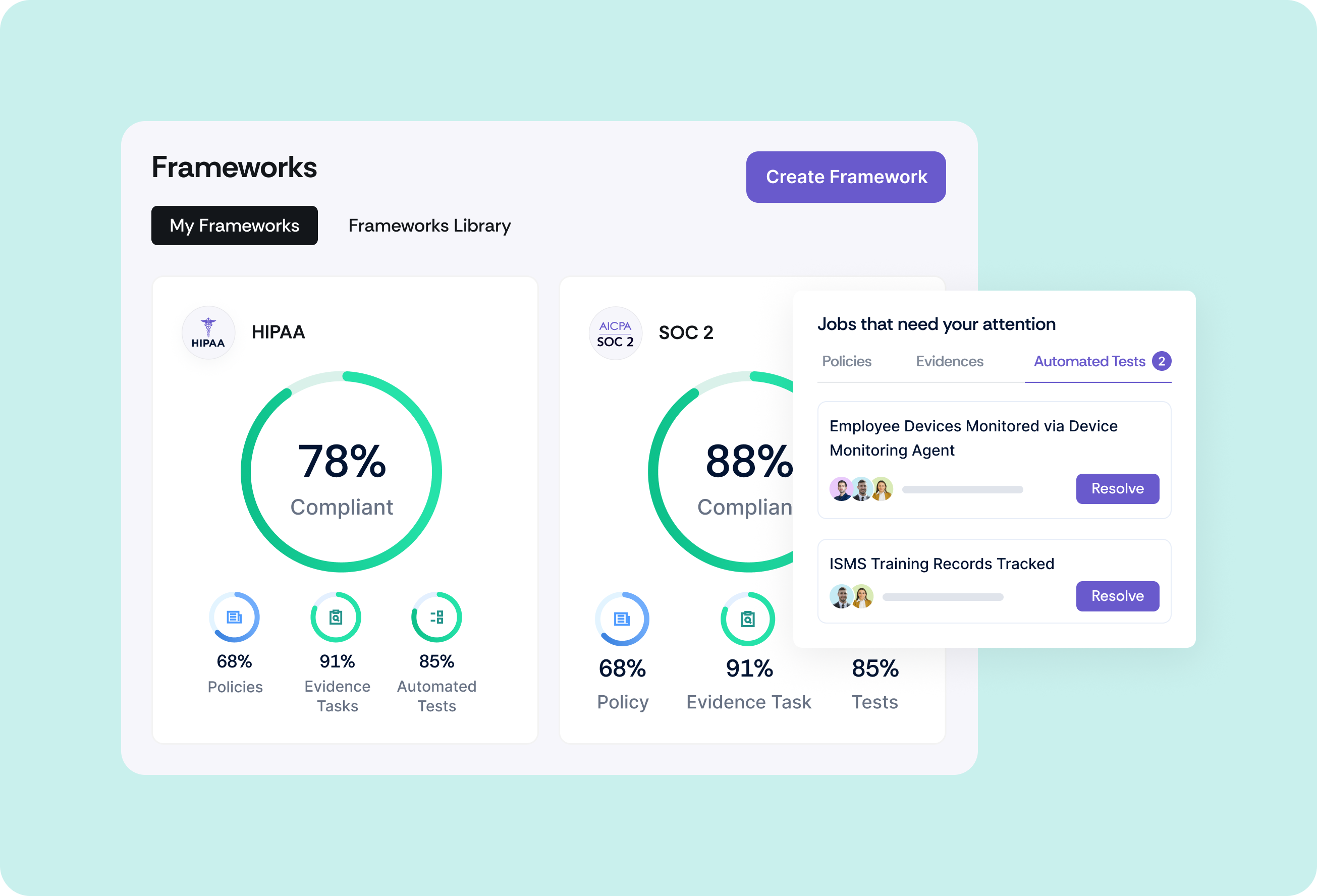
Scrut gives teams a structured way to connect framework requirements to the controls that satisfy them, and then map those controls to supporting policies, evidence, and tests. Its compliance dashboard also surfaces policies, evidence tasks, and automated tests that need attention. That gives Timeero a clearer picture of what is ready and what still needs work as an audit approaches, rather than reconstructing that picture from separate files at the last minute.
Collecting evidence from the systems where it already exists
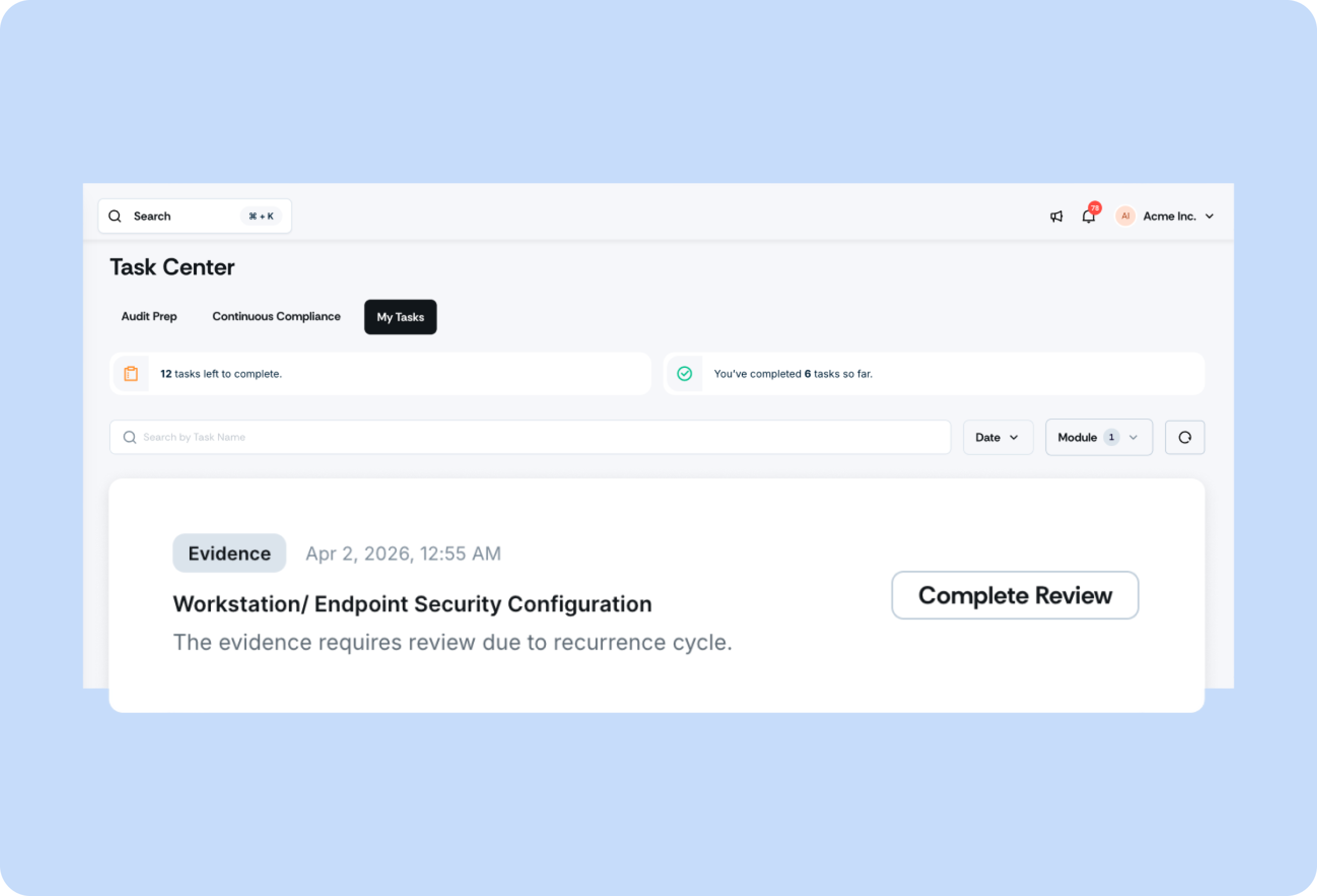
Evidence collection was one of Timeero’s biggest sources of manual work. Before Scrut, the team could take hundreds of screenshots for access reviews shortly before an audit deadline. Today, Omri calls automated evidence collection one of the most useful parts of Scrut.
With Scrut, you can manage evidence tasks by organizing the proof required for controls, including who owns it and how often it needs to be collected. For supported systems, Scrut can collect evidence from connected integrations through Automated Tests and Scrut Monitors. Scrut also shows which evidence is automated, partially automated, ready for automation, or still manual, so teams know where follow-up is needed.
Where evidence still needs to be uploaded manually, Scrut Teammates can review it for missing requirements, partial coverage, and inconsistencies, then flag what needs further attention. This gives teams another check before evidence moves forward for audit review.
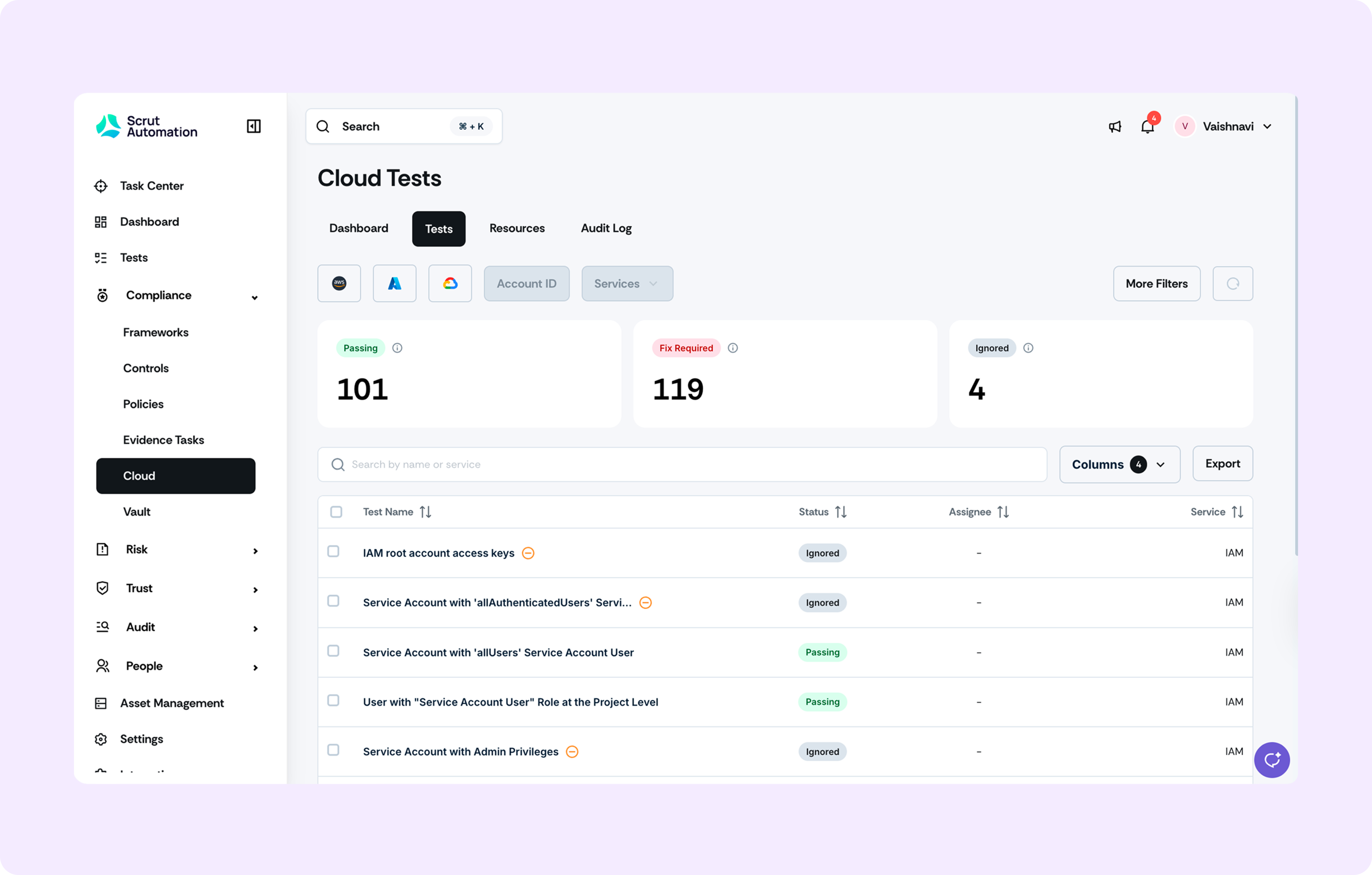
Catching control issues before they become audit-time work
Timeero also relies on continuous control monitoring. Omri highlighted Scrut’s ability to alert the team when a security setting moves out of compliance, giving them a chance to address issues before they surface during audit preparation.
For connected cloud environments, Scrut runs automated cloud tests and identifies resources that do not meet the test requirements. Failed tests move into a Fix Required state, where teams can review affected resources, assign ownership, use Scrut’s remediation guidance, make the correction, and have Scrut re-evaluate the resource.
Scrut Teammates can also generate AI-assisted fixes for cloud misconfigurations in formats such as Terraform, AWS CLI, and CloudFormation, together with a confidence score. That gives engineering teams more concrete remediation context when a cloud test fails.
IMPACT
Scrut made audit preparation faster and less chaotic for Timeero
- Time savings (less effort spent preparing for audits): Omri estimates that Scrut saves him over 20 hours a week on audit preparation and evidence collection. For work that previously involved spreadsheets, folders, and hundreds of screenshots, he described the current process as less of a headache and easier to handle.
- Operational impact (audit-ready ahead of the deadline): With Scrut, Timeero was able to get audit-ready much earlier in the cycle. Instead of scrambling to collect access-review screenshots close to the deadline, the team could prepare progressively and avoid the chaotic annual rush that they faced prior to using Scrut.
- People impact (more room for core responsibilities): Audit work had previously pulled in people who had other jobs to do. With Scrut’s team helping bring the work together and answering audit questions, making it much easier for the team to focus on their core responsibilities and security work instead of compliance busywork. Compliance preparation felt like work the team had support with, rather than another task being handed to them.
- Prospect and customer impact (easier security validation): Timeero also uses Scrut’s Trust Center to give prospective customers a real-time view of its security posture. This gives the team a clearer way to demonstrate its security and compliance standing when customers are evaluating Timeero.
"The Scrut team has been incredible. They really act like an extension of our own security team. Whenever we have a question about an audit, the support is very fast and concise, and there’s no stone left unturned.”
— Omri Smith, Cybersecurity Analyst, Timeero

Success stories from the GRC frontlines