

%20(1).png)


Compliance work rarely slows down because of one big blocker. More often, it’s the repeat setup, missing context, scattered review steps, and small manual checks that quietly eat into the team’s time.
May’s updates are focused on reducing that kind of friction. This month, Scrut makes it easier to start recurring audits, organize how trust information is presented, move through vendor assessments with more clarity, bring policy files into Scrut from Google Drive, and troubleshoot integration issues with better context.
Here’s what’s new this month:
- Faster audit execution: Clone existing audits for the next cycle and review audit activity across findings, requests, and corrective actions in one consolidated stream.
- More flexible Trust Portal presentation: Reorder sections and sort public-facing trust content so customers see the most relevant proof points first.
- Clearer questionnaire and vendor workflows: Improve Answer Library suggestions and guide vendor assessments through a structured timeline.
- Easier policy creation: Import policy content directly from Google Drive into Scrut as editable content or attachments.
- Expanded framework and integration support: Access DPDPA 2023 with integrated 2025 Rules, Freshservice support in Scrut Monitor, and clearer integration error visibility across the platform.
Feature updates
Start recurring audits faster and track audit activity more clearly
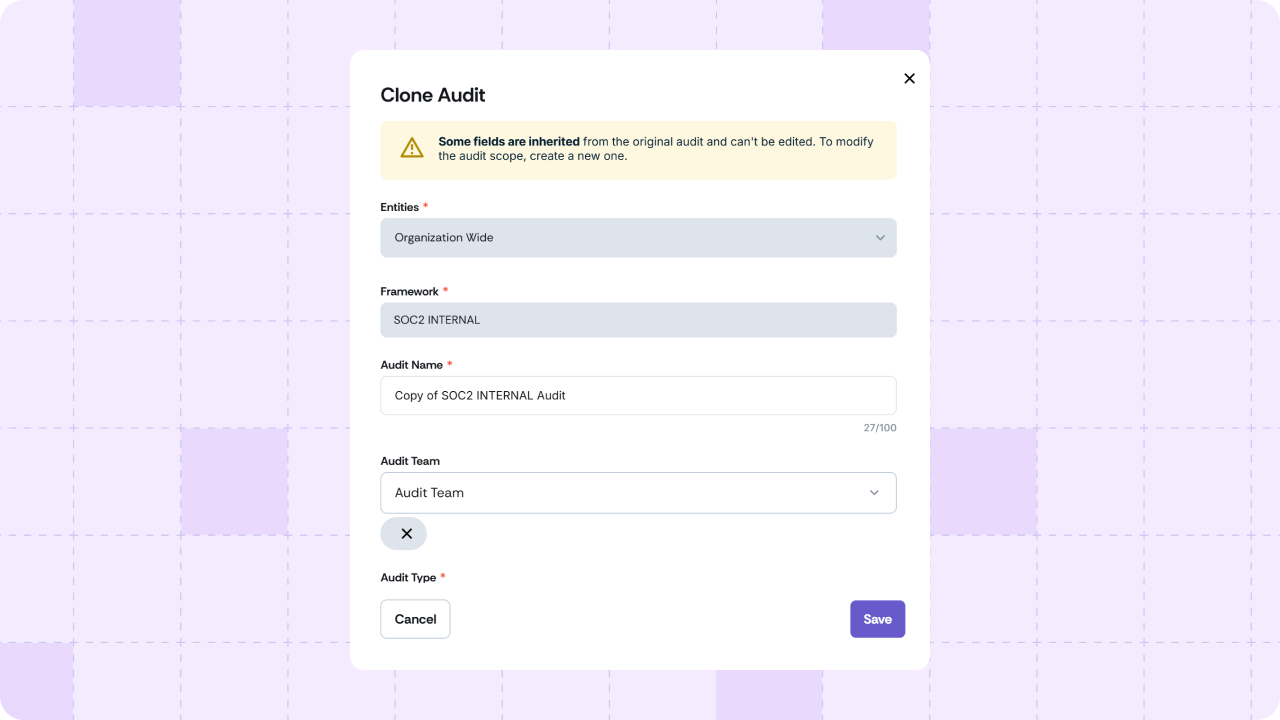
Recurring audits often follow a familiar structure. The framework, scope, teams, entities, and control selections may stay largely the same, while only the dates and cycle-specific details change. Rebuilding that setup every quarter or year adds avoidable effort and leaves room for small setup errors.
Scrut now helps teams reuse existing audit work while keeping each audit cycle clean and traceable. With these Audit Center updates, you can:
- Clone existing audits for faster repeat cycles: Use a completed or in-progress audit as the starting point for a new one, with framework, team, audit type, entities, and controls carried forward.
- Reduce repetitive setup effort: Start from an audit structure that already works, then update the name, dates, and cycle-specific details instead of rebuilding long control selections manually.
- Track audit activity from one consolidated log: Audit-level logs now aggregate relevant activity across findings, requests, and corrective actions, including comment deletions where applicable, so lead auditors and audit managers can understand what changed without checking each workstream separately.
This helps teams keep historical audit records clean while making every new audit cycle easier to launch and easier to track.
Shape your Trust Portal around the proof that your customers care about
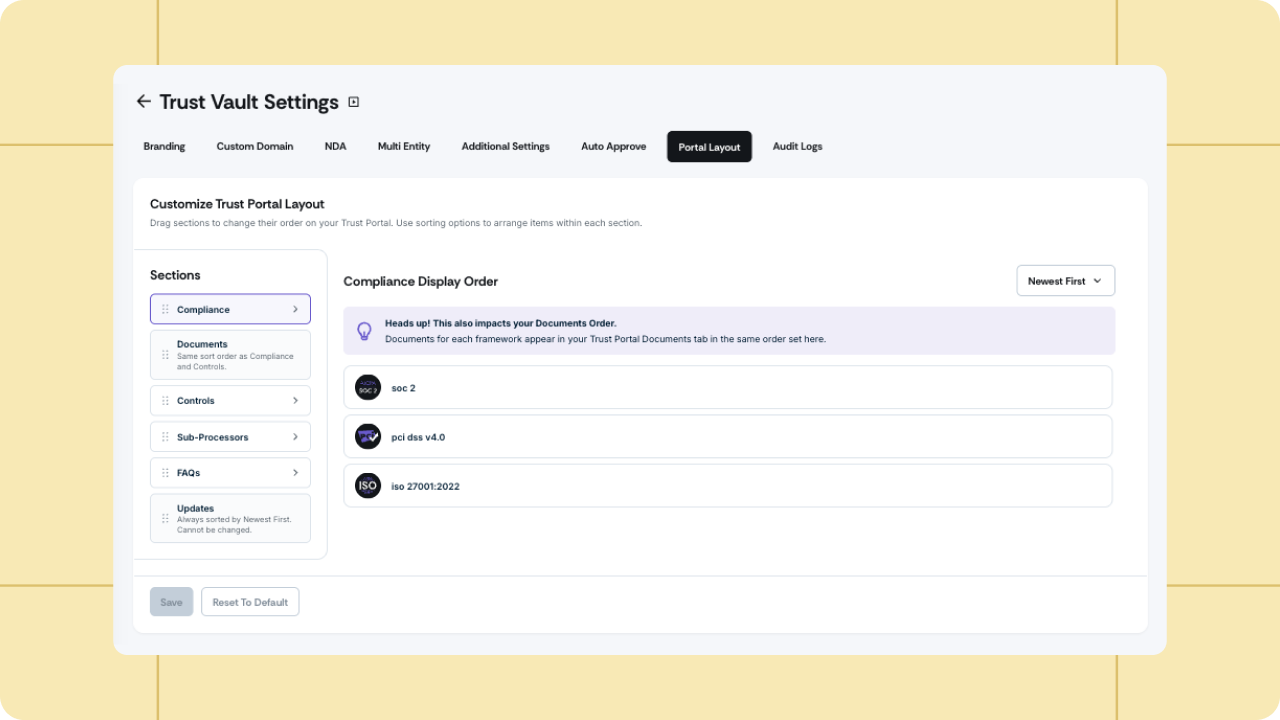
A Trust Portal is more than a place to publish compliance documents. It is where customers and prospects form a first impression of how your organization communicates security, privacy, and compliance readiness.
Since different audiences look for different proof, this update gives teams more control over how their trust story is presented. With the new Trust Portal updates, you can:
- Control the order of key Trust Portal sections: Reorder public Trust Portal sections so visitors see the information that matters most first, whether that means leading with controls, frameworks, subprocessors, FAQs, or updates.
- Sort Trust Portal content more intentionally: Apply section-specific sorting options, such as newest first, alphabetical order, or manual drag-and-drop where supported, across frameworks, control categories, controls, subprocessors, FAQs, and updates.
- Keep public documents aligned with your chosen structure: Public document ordering now reflects the compliance and control ordering you configure, helping the overall portal experience feel more consistent and easier to scan.
This gives teams more control over how trust information is consumed, without changing the underlying compliance data in Scrut.
See how Scrut’s Trust Portal helps you centralize trust content, control access, and present the right proof to customers and prospects. Book a demo to explore it.
Reduce repeat work across questionnaires and vendor assessments with Scrut Teammates
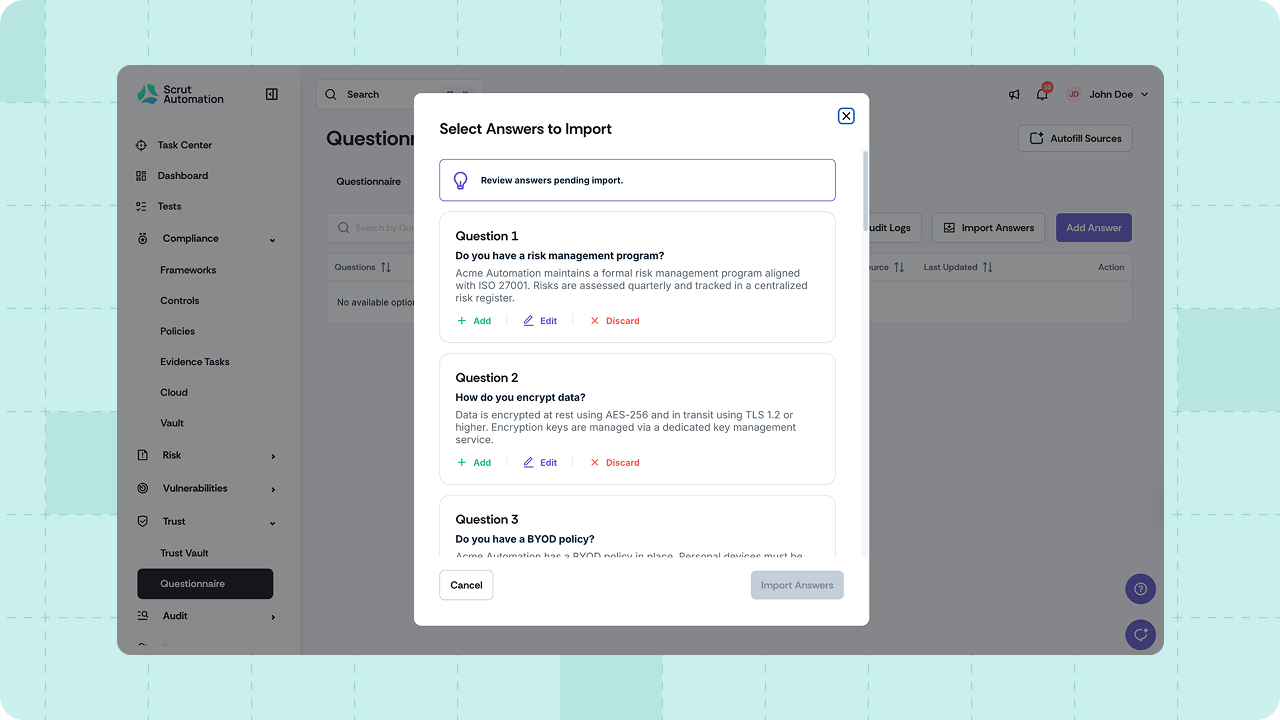
Questionnaire and vendor assessment workflows become harder to manage when known answers are missed, next steps are scattered, or assessment status moves ahead before the team is ready. These updates make automation more dependable and vendor assessments easier to follow from discovery through sign-off.
With these updates, you can:
- Get more dependable Answer Library suggestions: Answer Library matching has been updated to align better with the broader questionnaire automation flow, helping Scrut surface usable saved answers more consistently when automation and autofill are applied.
- Reduce repeat work during questionnaire responses: When a relevant answer already exists in the Answer Library, teams are less likely to re-enter the same information manually, making questionnaire workflows more predictable.
- Follow vendor assessments through a clearer timeline: Vendor detail pages now use a timeline-first experience covering discovery, document collection, questionnaires, risk review, and assessment completion, making it easier to understand what has been done and what still needs attention.
- Keep assessment completion under team control: Accepting a questionnaire no longer auto
- matically marks the vendor as assessed. Teams can confirm assessment completion when the program is actually ready, which better reflects how third-party risk reviews work in practice.
Together, these updates make questionnaire and vendor review work easier to follow, easier to complete, and less dependent on manual coordination across tabs.
If your team spends too much time repeating questionnaire answers or tracking vendor review steps manually, see how Scrut Teammates helps bring more structure and automation into the review process. Book a demo.
Bring policy content from Google Drive into Scrut faster
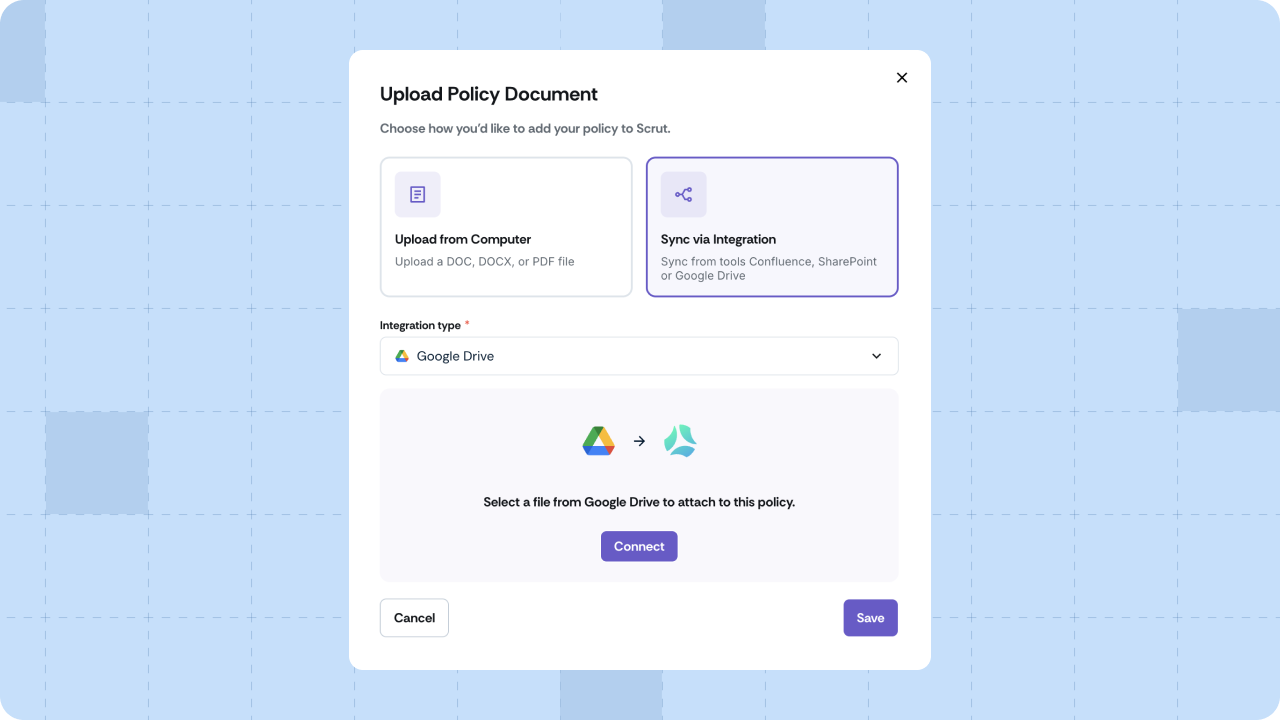
Many teams already draft, store, and manage policy documents in Google Drive. With this update, they can bring those files into Scrut more easily and move faster from stored documents to policy workflows such as editing, publishing, and control mapping.
With this update, you can:
- Import supported policy files from Google Drive:Compatible files such as .doc, .docx, and .pdf can be brought into the policy editor or added as attachments, depending on how the team wants to use them.
- Keep supporting policy materials attached: Files such as spreadsheets, decks, and images can be added as attachments, helping teams keep relevant policy material connected to the policy record.
This helps Google Workspace-centric teams move existing policy material into Scrut with fewer setup steps.
Framework updates
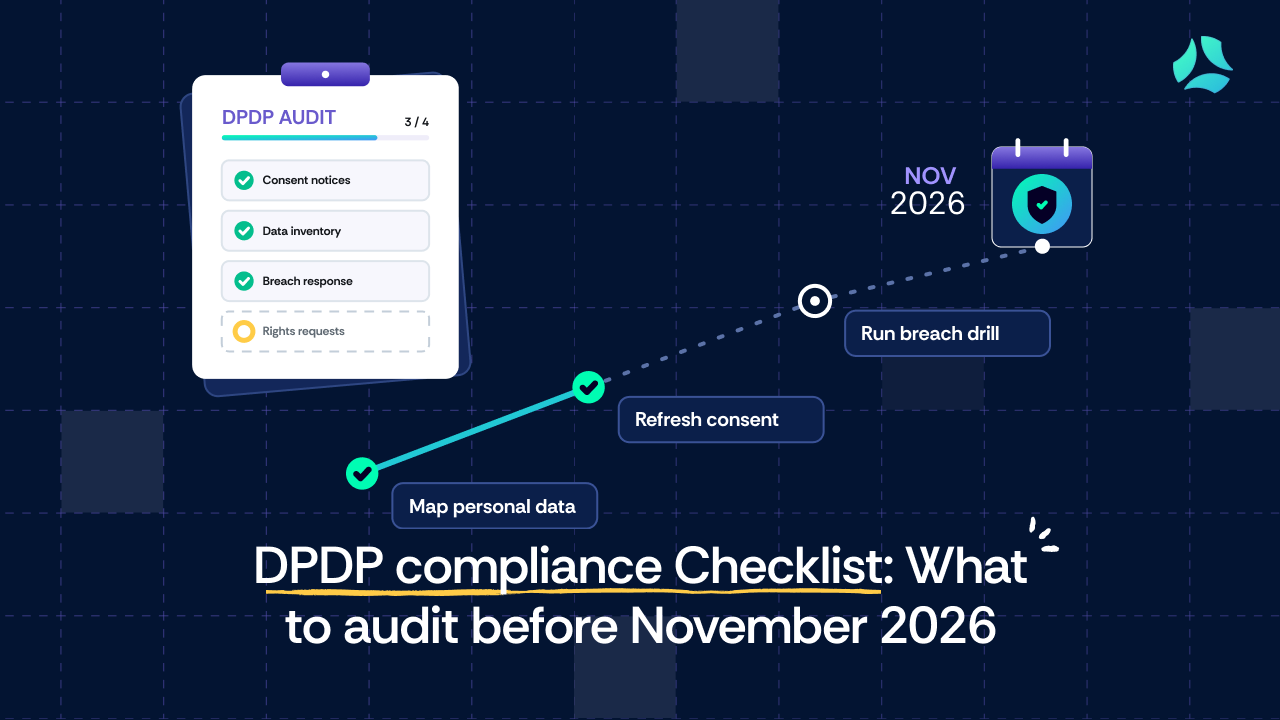
DPDPA (2025 Act rules): Scrut now supports the DPDPA 2023 regulation with integrated 2025 ruleset, helping organizations that process personal data of individuals in India manage privacy requirements in a more structured way.
This framework is especially relevant for SaaS companies, IT/ITES organizations, fintech companies, healthcare companies, e-commerce businesses, and global companies operating in the Indian market.
Explore the Scrut Frameworks Library to access 70+ ready-to-use frameworks, or connect with our team to set up a custom framework tailored to your compliance program.
Integration updates
This month’s integration updates make it easier to bring ticket-based evidence into Scrut and spot integration issues before they affect compliance workflows.
- Freshservice integration in Scrut Monitor: Scrut Monitor now supports Freshservice, allowing teams to fetch and monitor Freshservice tickets, filter them using tags, and export ticket data into a consolidated CSV evidence report with key metadata such as subject, category, requester, responder, priority, status, and timestamps.
- Actionable integration error visibility: Scrut now shows clearer, more actionable integration error messages instead of generic sync failures. Affected modules, such as People and Tests, also display visible indicators when integration data is stale or unavailable, helping teams understand what is impacted and resolve issues faster.
Explore Scrut’s integrations to see how your team can connect more of its operational systems to automate evidence collection and keep compliance data current.
Closing note
May’s updates are focused on reducing the small but costly points of friction that slow compliance teams down: rebuilding recurring audit work, manually organizing trust content, repeating questionnaire answers, navigating vendor reviews without a clear path, and troubleshooting integration issues without enough context.
As always, Scrut’s product updates are designed to help teams reduce manual effort, improve audit readiness, and move faster across security, compliance, and trust workflows.
Book a demo to see how Scrut can help your team simplify compliance operations and move work forward with more confidence.


%201.png)



.png)